
The Henry Williamson Society
Uncategorised
Robert Williamson
Past President: an illustrated profile of Richard Calvert Williamson
ROBERT WILLIAMSON
A PERSONAL PROFILE OF THE SOCIETY'S PRESIDENT

I am the fourth child of Loetitia and Henry, and I was born in September 1933.
I went to Stiffkey Village School, Paston Grammer School, and then on to Blundell's School, Tiverton, in Devon.
After doing my National Service in the RAF, I worked at Marconi's in Chelmsford, and then for Decca Navigator in France and Canada.
I then went into teaching and qualified in 1965, retiring in 1998, then as a Primary Head teacher.
I married Mary in 1957, and we have one daughter, Sarah, and three grandchildren, Sophia, Laurence, and Lucy.
A life-long passion for sailing was sparked by 'sailing' Henry's dinghy Pinta with John, when it was stored in the Turkey Shed at the farm in Norfolk. In later years, when I was able to get my own boats, both John and Richard occasionally joined me, sailing the Essex coast, and the North Sea to Holland and beyond.
Music and poetry have both been important to me – a very broad taste, but Vaughan Williams, Richard Strauss and Sibelius have a very special place, as has the poetry of Housman, Kipling, Masefield, and many others.
*************************
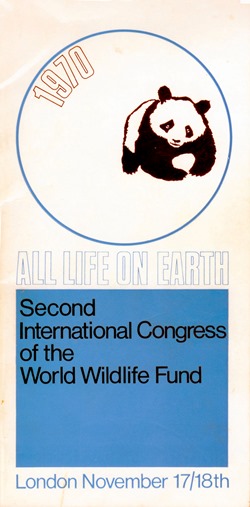
The World Wildlife Fund Second International Congress, 1970
HW’s involvement in, and attendance at,
The World Wildlife Fund Second International Congress
held in London on 16, 17 and 18 November 1970
by Anne Williamson

(As printed in the WWF Congress ‘Cabaret’ programme on a page all to itself.) It is not known when those words were spoken, or on what occasion, but it was at least 70 years ago.
 |
|
The cover of the Congress booklet, giving details of the various sessions |
I am concentrating here on this single event as an example of HW’s involvement in conservation – but with a few asides.
The World Wildlife Fund (today it is officially known as The World Wide Fund for Nature, although most people still use its original name) was first promoted in April 1961 and officially founded in September 1961, with its headquarters in Switzerland. Its main aims were wilderness preservation and the reduction of human impact on the environment. The concept was the brainchild of Julian Huxley.1 Founder members were: Prince Bernhard of the Netherlands; Prince Philip, Duke of Edinburgh; Julian Huxley; Max Nicholson (Director General of English Nature Conservancy); Peter Scott; Guy Mountford, and Godfrey Rockefeller. The name was thought up by Max Nicholson, while Peter Scott designed the iconic giant panda logo ‒ the panda being known to be under threat. Prince Bernhard was the first president, while Prince Philip was the second – and at the time of his death on 9 April 2021 at the age of 99 was still President Emeritus. The first International Congress was held in Switzerland in 1963, and the main theme then was the first warning of global warming, based on the work of Frank Fraser Darling, which Julian Huxley helped to promote. That was nearly sixty years ago. Fraser Darling gave the BBC’s prestigious Reith Lectures for 1969, entitled ‘Wilderness and Plenty’, which received considerable attention; he was knighted in 1970.
The Second International Congress of the WWF was arranged to be convened in London in November 1970 as the finale for European Conservation Year, with the theme of the conservation of endangered species and the threat to their habitat. That was fifty years ago.
It is not clear how HW’s involvement in the WWF came about. The first mention about the project within his personal papers is early 1964 – and from its fairly casual mention there it is quite possible that he was involved from the very beginning, in 1961. He was of course very well known as a nature writer. But perhaps more importantly in this particular connection, he was also a friend of Peter Scott.2 Indeed, he had made a visit to Scott’s lighthouse abode on the Wash marshes as early as 1937.
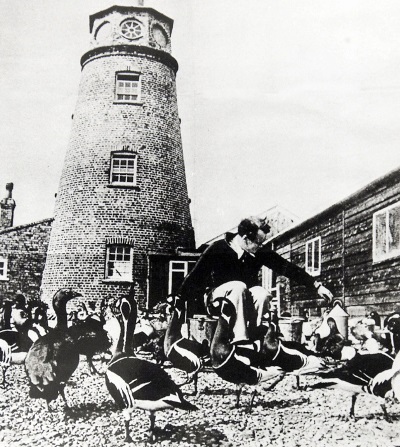 |
| Scott at his East Bank Lighthouse, Lincolnshire, late 1930s |
HW ascribed Scott’s war service as a commander in motor torpedo boats to his central character, Peter Raleigh, in the ending of The Scandaroon. Due to its dilapidation and degradation during the war, Scott had given up the lighthouse at the end of the war. He had first visited Slimbridge when staying with a friend in 1945, where he saw the rare Lesser Whitefront geese. Greatly encouraged, he decided it was the place to establish a centre for the Severn Estuary for the study and conservation of wildfowl. He moved to Slimbridge in 1949, and set up the Wildfowl Trust. Scott was also in the 1960s a friend of HW’s son John. The pair were rivals in the British National Gliding Championship competitions – run by Ann Welch (née Edmonds), HW’s ‘Barleybright’ from the 1930s.
Now a small digression, though it forms part of the background to the main path.
At the end of February 1964 HW (who was renting a room in the London home of his first wife Loetitia’s cousin and one-time bridesmaid Mary Hewitt3) received a letter from Scott asking if he would make one of the after-dinner ‘Toasts’ for the Wildfowl Trust Annual Dinner to be held in London on 14 May. On 10 March he telephoned Scott accepting the invitation. There is a letter from Scott’s wife4 confirming this, and stating that HW was to propose the toast to the actual Trust.
On being sent a final draft of the programme for the dinner by a man whose designated position was ‘Controller’ (Brigadier C. E. H. Sparrow, CBE, MC), HW wrote on it an opening for his speech:
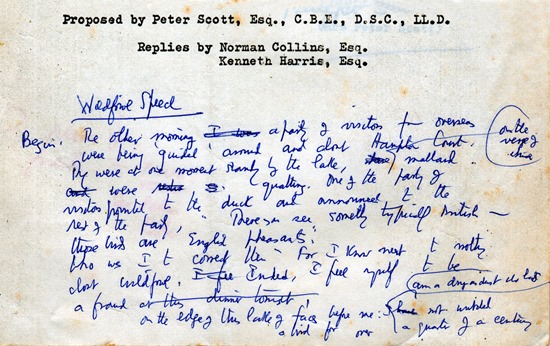
Transcript:
The other morning a party of visitors from overseas were being 'guided' around and about Hampton Court. They were at one moment standing by the lake, on the verge of which mallard were quatting. One of the party of visitors pointed to the duck and announced to the rest of the party, “There you see something typically British – those birds are English pheasants.”
Who was I to correct them? I know next to nothing about wildfowl. Indeed I feel myself to be a fraud [then crossed out ‘at this dinner tonight’ – continuing] on the edge of this lake of faces before me. I am a dry as dust who has not watched a bird for over a quarter of a century.
Sadly I have not found a formal copy of this toast, so we will never know how it continued. On the morning of the dinner, 14 May 1964, HW, recently returned from a visit to the Western Front battlefields, was working on his First World War articles for the Evening Standard5, but his diary records:
Afraid of Wildfowl Trust dinner tonight; & my speech.
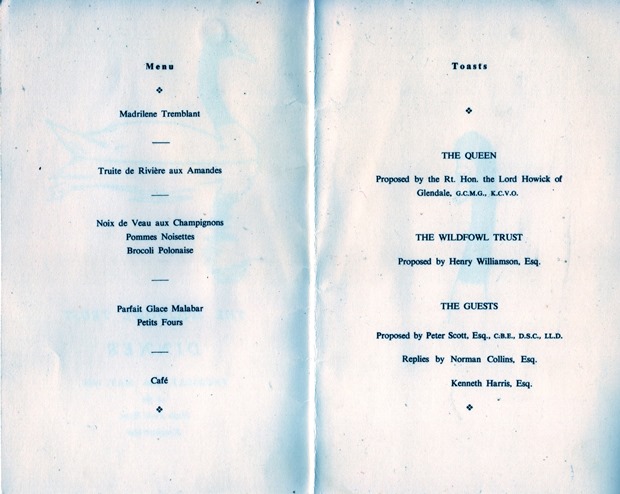
However, all went well as he recorded later:
Kerstin and Mary came with me.6 K. said speech good. Also P. Scott.
The next morning he got up
at 5.20 am & crept out of the flat with my baggage – left at 6.5 am, sunny drive to Chichester.
And so he arrived at his son Richard and his wife Anne's flat at 8.10 – in time for breakfast! He and Richard then went off to Kingley Vale National Nature Reserve for a day’s work.
************************
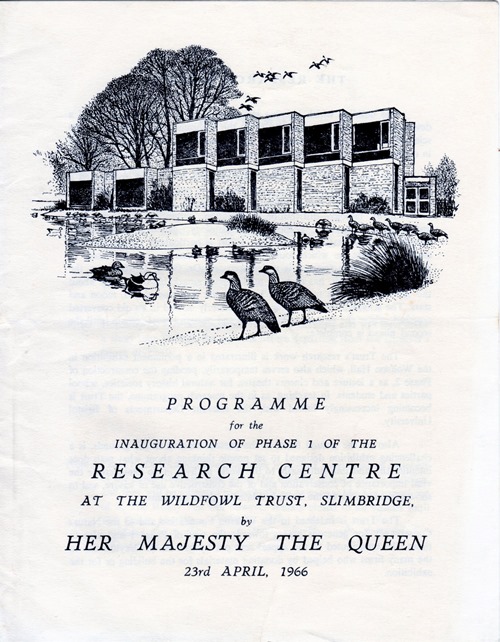
On 23 April 1966 HW attended the ‘Inauguration of Phase 1 of the Research Centre at the Wildfowl Trust’ at Slimbridge by her Majesty the Queen, and was presented to the Queen on that occasion. He made a note on the programme:

Returning to the actual World Wildlife Fund Trust trail, we find that HW was in fact on the Advisory Committee, one of quite a long list which included a still youngish David Attenborough (then Head of the Natural History Department of the BBC), the Duke of Bedford, Grahame Dangerfield, Arthur Koestler, Elspeth Huxley, Laurens van der Post, Keith Shackleton, David Shepherd, Philip Wayre, the Earl of Wemyss, Sir Solly Zuckerman, and Kenneth Allsop – all well-known names associated with conservation work – but also some slightly surprising ones including Bernard Delfont, the pop singer Adam Faith, Rex Harrison, and Spike Milligan.
There is an official World Wildlife Fund letter with a long list of names attached whom committee members were to approach for 'large' donations: well over 100 names of the great and the good possible donors. The striking letterhead is formed from the image of a cheetah:

At the end of which HW has written, in red marker ink:

This is what being on Advisory Panel involves one in!
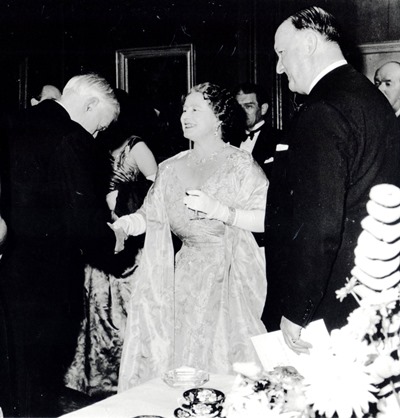
On 1 December 1964 (his 69th birthday) HW was in London attending an evening of recital of Shakespeare’s poetry arranged by the Royal Society of Literature, of which he was a Fellow, attended by Her Majesty Elizabeth the Queen Mother, to whom he was presented by Lord (‘Rab’) Butler, President of the RSL:
The following day HW’s diary records that he went to Buckingham Palace (with others) for a meeting chaired by Prince Philip to discuss a forthcoming World Wildlife Conservation meeting. He made a note about the timing arrangements on the back of a WWF compliments slip:
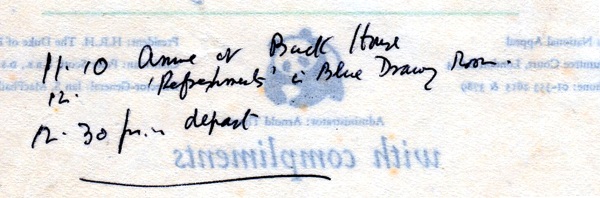
While in his diary he wrote:

Meeting at Buckingham Palace, Prince Philip, Wild Life World Conservation. I went in with John Rothenstein. Met Cyril Connolly, Eric Linklater, Lord Gladwyn (Mary Hewitt’s cousin) & others. Prince Phillip [sic] seems to me a ‘classless’ man.
No actual details are given about this meeting, but presumably it was to discuss initial proposals about arrangements for the Second International Congress that was subsequently held in November 1970. Prince Philip headed what was known as ‘The British National Appeal of the WWF’, and the aim of this Second International Congress was primarily to raise both the WWF’s profile and some much needed funds. The choice of date was no doubt to some extent influenced by the fact that 1970 was also designated ‘European Conservation Year’, and certainly Prince Bernhard saw the two events as part of one important whole, speaking at both venues on a single theme.
A large number of events took place in this country to celebrate and give prominence to the European Conservation Year. The Nature Conservancy (now known as Natural England) played a prominent part with events in various of the National Nature Reserves, and particularly with an exhibition at Alexandra Palace in London in February 1970, for which HW’s son Richard, as warden of Kingley Vale National Nature Reserve, with myself as ‘support’, was asked to set up a major part. This involved having a display of living chalk grassland with all attendant flower species – in the middle of winter – which had to be specially grown at great expense in a designated greenhouse, inevitably resulting in a chaotic French farce situation which we then had to cope with – but that is diverting from the subject.
*************************
We jump now to 7 July 1970, when HW’s diary reveals he received an official
Letter from WILDLIFE – wanting me to write Features Articles on ‘Threatened Animal Species’
These articles were to coincide with the WWF Congress that coming November. The letter was from the Director of Public Relations (Gerald Samson). On telephoning him HW learned ‘from a careful, Parliamentary voice’ that he would need to travel to Switzerland:
and examine the World Wildlife Records and write articles from therefore on threatened animals (in D. Express). I said I’d write to Express & proposed 4 articles.
Although HW agreed he was rather appalled. It was not good timing for him. He certainly had no wish to travel to Switzerland, nor to pore over complicated research material. He was already in the midst of the total turmoil of the difficulties involved in preparing the script for the proposed film The Vanishing Hedgerows (a pioneering documentary directed by David Cobham about conservation in farming practices); dealing with the equal turmoil engendered by a proposed biography of Field Marshal Earl Haig; AND was writing, or trying to get on with, The Scandaroon. He had also just sorted out his contribution ‘The Genesis of Tarka’ for the Lord Taverners’ birthday tribute book The Twelfth Man, published to celebrate Prince Philip’s 50th birthday in June 1971. Added to all this, he was also editing – in effect rewriting – the book written by one of his first wife Loetitia's Chichester cousins, 'A New Forest Child'7, which was to remain unpublished. (And throughout the period HW was also in a state of depressed emotional turmoil over yet another young woman, affecting his ability to free his mind to write as he wished.)
So, having agreed to approach the Daily Express, his diary shows how alarmed he felt (written in capital letters):
I DREAD THEM [and he itemises his work load as above]
I HAVE NO KNOWLEDGE of foreign wild animals.
By Sunday, 12 July his agitation had risen to a point where he telephoned Peter Scott about the proposed articles. Scott calmed him, mainly by saying it was quite unnecessary to visit Switzerland, and suggesting ‘Whales’ as a good subject for one of the articles. HW then added, as article ‘No. 2’:
I thought ‘Robin Redbreast in a cage’ theme for massacre of small birds in France & Italy during migration. The Turtle doves in spring – guns all along the fly-lines. Swallows over the Alps in bad weather.
3) Otters.
On Tuesday 14 July HW travelled to London to see the Daily Express about the proposed articles. It was agreed he would do 4 articles for £100 each for autumn publication. He noted also that later that day he met (at a Royal Society Literature lecture):
Ld Clark’s son Alan, a historian, who has praised my Chronicle Gt War novels.
It seems a great deal of ‘data’ in one form or another was now sent to HW as he refers to it more than once:
I can’t face the data.
During the first week in August his sons mustered at the Field in Georgeham for a ‘Working Week’ of felling trees, painting the caravan, and other maintenance. Son Richard was then able to help him form his ideas for the articles, and provided material for him to use.
On 14 August HW noted:
Tackled the form of application for the November World Congress of Wildlife,
and noting the various tickets for which he had applied, which would ensure entry to Buckingham Palace and the Talk of the Town Gala Dinner (the latter at £50 each) for himself, Richard and John; and for Richard and himself for lectures and a coach outing to a Norfolk Nature Reserve (Welney Marsh). The total cost was £187/10/-.
(I have deduced that tickets for the Gala Dinner were on a sliding scale – if members wanted to sit with the higher echelons of Society (especially Royalty) the tickets cost much more: a newspaper report notes prices up to £500!)
On 16 August HW recorded:
Wrote to Peter Scott about the forthcoming book The Living World of Animals to be published 12 Nov. 1970 at 6.30 at London Zoo in presence of Prince of Wales. He wants me to give a pre-publication boost of it. I must attend thereto.
He continues about his frustration over writing the four articles, having been sent information about whales written by an American researcher:
That’s enough to drive me away from the subject.
But he obviously buckled down to the task, as we find on 26 August:
I wrote more on Whales – article one, 1100 words – far too much for the D. Express. Then I tackled the subject of small migratory birds being shot & netted on the fly-line across the Landes in France & again as they go over the passes of the Pyrenees. Ditto in Italy. A horrifying, barbarous procedure.
And in 28 August:
Struggled with revision of No 3 essay.
On 2 September HW noted that he had revised the articles and they were ready to send to his typist Liz Cummins. But on trying to contact her he discovered she was away on holiday. So, typically, HW, the following day:
Struggled miserably with the World Wildlife articles suggested by Peter Scott.
And the next day, 4 September:
. . . went on with the articles which are far too long. I can’t see how to shorten them.
That weekend he attended the wedding of Bryony Duncan, daughter of his friend the poet Ronald Duncan, at St Nectan’s Church, Hartland, and then at Speke’s Mill, their home in the Marsland Valley on the Devon/Cornwall border. On his return, he continued work on the articles. He made good use of his weekend at Speke's Mill, as the diary entry for 21 September reveals:
I wrote a good D. Express article today called WILL A BUTTERFLY SAVE A VALLEY. (the Large Blue at Speke’s Mill where it breeds on heather etc) & posted it off to the paper.
And on Saturday, 26 September:
My Blue Butterfly article, much cut, in Express today. Why do I always send too long an article? Features Editor has specially asked me not to exceed 600 words, for which I get £100, or ¾d a word!
The article appeared with the title ‘When a rare beauty comes out of her shell’.8 Although not at all apparent, this is actually one of the four articles he had originally agreed to do.
There is a cutting in his archive from The Times of 17 September 1970, reporting a speech made by Jacques Cousteau, at that time widely known for his undersea explorations, on returning from a three-year survey of the oceans in his oceanographic ship, the Calypso, a converted British minesweeper:
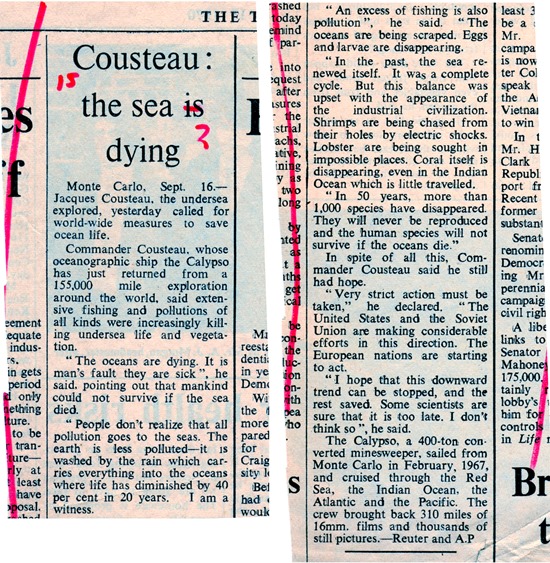
HW evidently marked this for his own forthcoming article.
That was in 1970, and fifty years have passed since Commander Cousteau's words and their dire warning, and still the same cries are being made today.
That HW was worrying about the book review he was to write and had contacted Peter Scott is shown by his diary entry for 19 October, when time was getting very close to the publication and prestigious launch of the book:
A kind letter from Peter Scott. He said of the Reader’s Digest publication (of his The Living World of Animals): “. . . careless stupidity is quite characteristic”. The proofs were “all too late to be corrected now”, even when sent back “by return”. He wrote ‘You are not ‘small beer’. You are a writer of great distinction & originality & [written in caps] A MOST IMPORTANT MAN!’ . . . I replied suitably praising his forthcoming book.
I did some work today. Read & condensed the 3 articles for London congress week – 17, 18, 19 November of W.W. & sent copies for typing to Liz Cummins, Cornwall.
On October 28 he was staying with his son Richard and his wife near Chichester, having, with others of his family, just seen his first wife Loetitia off from Southampton by liner to visit their eldest son Bill and family in Canada. There was considerable discussion about the articles.
Very tired, & the articles, with errors & omissions here & there, typed by Liz Cummins worried me.
Then, leaving his car at Petersfield (the local railway station), he went by train to Walton-on-Thames for the dinner and annual general meeting of ‘The Ghosts Club’ on Hallowe’en – where Wentworth Day spoke and HW read a piece from ‘Richard Jefferies’ Story’. The next day it was back to Petersfield to collect his car and return to our little rented ‘two up & two down’ cottage in Chilgrove (he complained about the food – he had arrived too late for lunch – and the accommodation: he had to sleep on the sitting room floor!).
On 2 November he drove to Swindon for a meeting of the Richard Jefferies Society, of which he was President, where Rolf Gardiner gave the evening talk:
First class lecturer; ditto subject of conservation.
A photograph was taken of the occasion, of which there is only a photocopy in the Archive:

After this typical frantic burst he finally returned to Devon on 3 November. His ‘writing worry’ was then transferred to lack of progress on the script for The Vanishing Hedgerows and The Scandaroon.
On about 5 November he received a copy of what he quite wrongly called throughout –
Peter Scott’s book, The Living World of Animals.
There are no details about HW’s subsequent review, and I have been unable to track it down.
On 11 November he travelled back to our cottage, arriving ‘after tea in Petersfield’ (just ten miles short of his destination!), and the following day again took the train to London and settled himself in at the Savage Club. After dealing with various business matters he went on to the offices of the Daily Express in Fleet Street:
To look at proofs of my 3 articles for next week. I found a serious fault in No. 1 essay as pointed out by Alison, Features Editor. It did not FLOW. So I recast it and was happy to be told ‘It’s all right’. I had mixed up autobiography with my theme of the decadence of farming (soil conservation).
(This became article No. 3 when printed.)
That evening he attended the launch of The Living World of Animals at a ‘Wildlife’ party held at the Elephant House of London Zoo (Regent’s Park).
Prince Charles could not be present, had been in Paris for De Gaulle’s funeral yesterday ‒ so Princess Anne deputised. I was presented by Peter Scott. She is beautiful.
The Readers Digest book The Living World of Animals was published on 14 October, and was actually written, not by Peter Scott as HW states in his diary entries, but by Dr L. Harrison Matthews, FRS, with others. Dr Matthews (1901‒1986) was a very well-known zoologist, with several books and learned papers on mammals to his name.
The next day HW again visited the Daily Express office
to be sure of no errors in the 3 articles.
(One can see how worried he was about these articles, to which he understandably attached great importance.) He then returned to our cottage near Chichester (again having had tea in Petersfield) and in his diary once more complains of the sleeping arrangement – on the floor with a sleeping bag. He spent a day working with Richard, destroying invasive brambles on the Kingley Vale National Nature Reserve.
On Monday 16 November HW again drove to Petersfield and then by train to London, and after settling in at the Savage Club,
By No 9 bus to Royal Garden Hotel. [Headquarters for the WWF Congress.]
(The first article, about small birds being shot in Italy & France, well set up on page of Express today.) . . .

I got my tickets & attended the opening meeting, presided over by Princes Philip & Bernhardt of the Netherlands.
Met Barry Driscoll9 who attached himself to me . . .
The booklet contains outline details of all the meetings, lectures and social events, and has profiles of all those taking an active part in the proceedings. There was also published afterwards the official Transactions of all the proceedings, which makes an interesting historical record of the state of, and thinking about, conservation at that time.
The following day HW met up with Richard, who had travelled up to London by an early train, and they attended at the Royal Garden Hotel Palace Suite for that day’s lectures. HW noted in his diary:
Article No 2 – on Whales – prominent on an inside page of Express, also cartoon of Peter Scott & the young women (in the news) who objected to being sex-symbols. I met Phillipa Scott (who objected to the cartoon).

Richard Williamson remembers his father buying a large number of copies of the paper and distributing them around the lecture hall, but little notice was taken of them. Most of those attending would have been serious scientists, and would not necessarily have appreciated HW’s emotional approach. However, Peter Scott thanked and praised him very sincerely for his efforts.
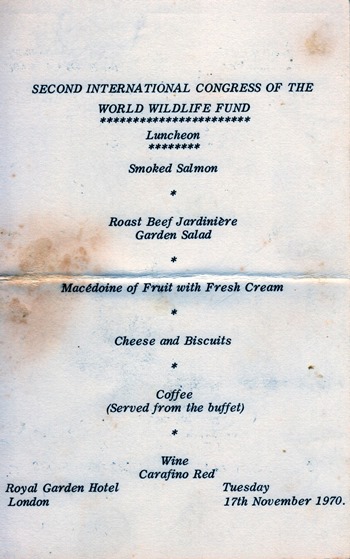
Richard also kept the lunch menu as a souvenir: evidently nothing was stinted!
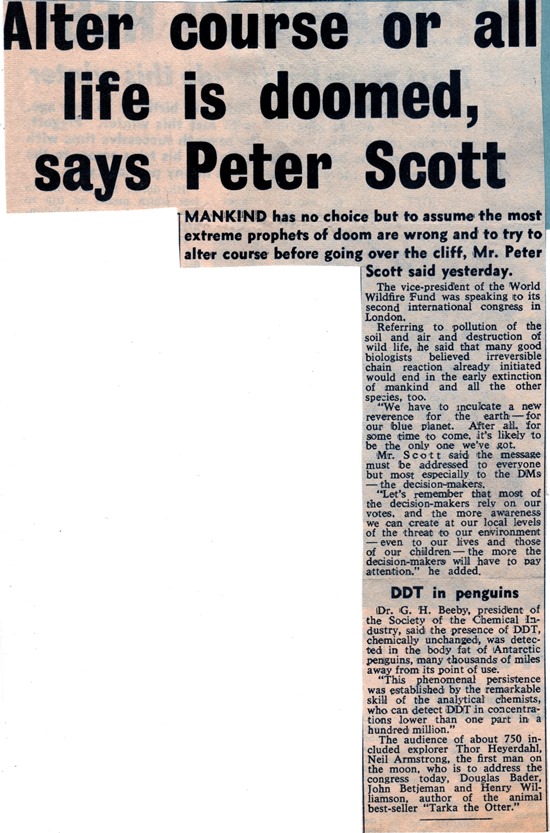
The speeches at the Congress were widely covered in the national and local press, and HW received a number of mentions as one of those attending. A small selection of the cuttings in the Archive is given below:
Express & Star, Wolverhampton, 17 November:

Evening News & Dispatch, Edinburgh, 17 November:

Daily Express, 18 November:

Morning Star, 18 November:
Wednesday, 18 November was the third and last day of the Congress. One of the speakers was R. E. Boote, then Vice-Chair of the Nature Conservancy (and so one of Richard’s superiors); he was also Chair of the Committee for the European Conservation Year. At question time HW stood up and began:
‘As the oldest person present . . .’
A year or so later Bob Boote was on an official visit to the Kingley Vale National Nature Reserve, and Richard reminded him of the occasion: Boote remembered that opening phrase very well, but not the ensuing question – and neither can Richard! However, the Transactions that emanated from the Congress gives HW’s statement in full; but this official version does not begin with the words that Richard and Bob Boote remember!
Mr Henry Williamson: I am an optimist. I have seen Life and the ideas of Truth, and although there are tremendous opposing forces, they are coming into being. And from what I have heard today and yesterday at this meeting, I feel it is a great triumph for Truth and that the world is aware of it, and may I say that a situation has to get very bad indeed, as a wound in battle – all your hurt flesh has to rot away under great pain before new growth can come. My observation and feeling is that the new growth has come, and that this society and many others are the pioneers of it and all their ideas will be accepted in due course.
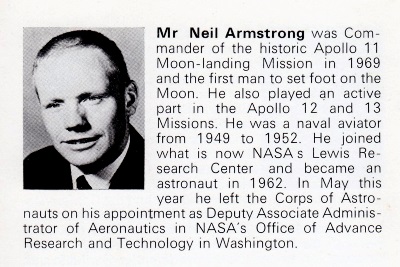
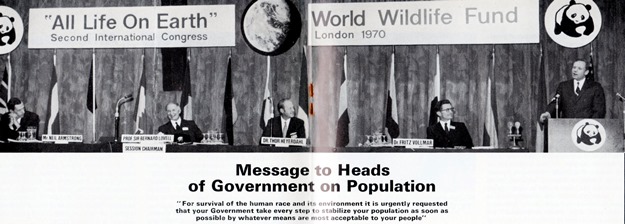
Among the speakers was Neil Armstrong, who met and was interested in Henry’s glider-pilot son John (as a fellow ‘flyer’).
From the Congress programme:

 |
|
Left to right: unknown, Prof. Sir Bernard Lovell, Dr Thor Heyerdahl, Dr Fritz Vollmar, with Neil Armstrong speaking at the podium on the right |
The title of his talk was subsequently used, of course, for David Attenborough’s celebrated television series. HW did not record Neil Armstrong’s lecture, but Richard scribbled some notes in the back of his Congress programme, and they are worth noting:
The earth is a deep blue with lacework of clouds and with tans and browns of the continents beneath showing through. The moon surface is dead and dreary. But it shows evidence of continuous evolution. Craters are rolled and eroded, sharp edged, once a molten state. What I saw was a single snap from a motion picture of planetary life.
Planet and stars are in continuous evolution.
Life of man is as the single visible spectrum change. The Earth high overhead when standing on the surface of the Moon is very remote and very small. You might dismiss the Earth as very unimportant. But the Earth is the only island for Man. Protecting the Earth from its own population is of the greatest importance. Removing remote areas will occur this century.
So how can the technology we have now acquired be used to help the earth? Tracking animal movements to understand their ecology will help to understand how creatures fit into the pattern of life on Earth.
Fossil fuels will be used to the end of the century but atomic fusion power thereafter together with hydro-electric and harnessing other natural powers.
Among the other world authorities and personalities giving suggestions as to how life on Earth could continue were Sir Bernard Lovell, Jacques Cousteau, Prince Philip, Prince Bernhard, Guy Mountfort, David Attenborough, Sir Julian Huxley, and Sir Peter Scott.
HW, inevitably, became bored with the lectures, and recorded later in his diary:
Final day of the W.W.F. Congress.
My final article in Daily Express [and he then comments that they were all of the original length: that is as sent in by him, and not cut by editors as he had feared.10]
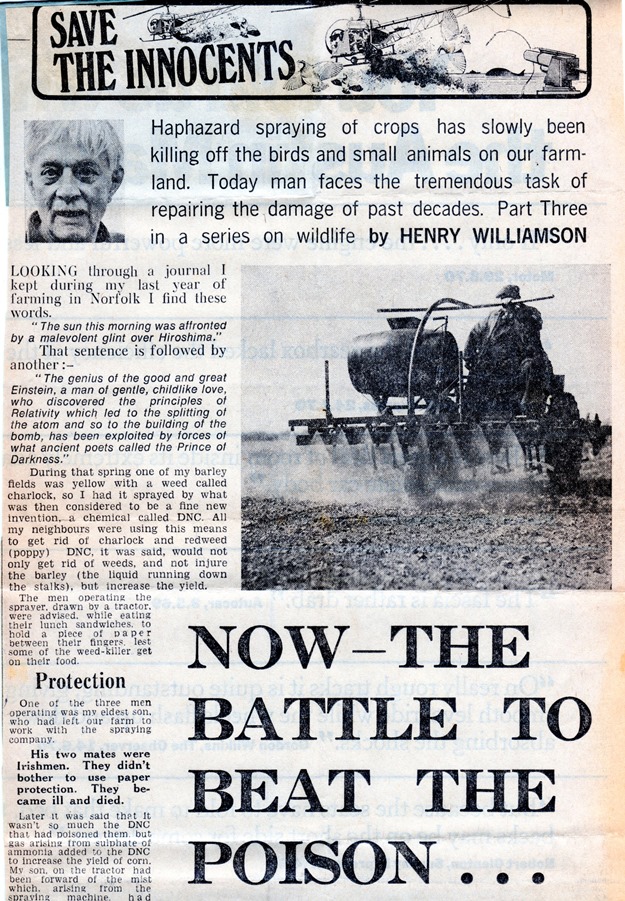
The three articles comprising ‘Save the Innocents’ are reprinted in Days of Wonder (HWS, 1986; e-book 2013).
HW then continues:
I was a little tired for the lectures . . . [and so left the hall]. Found myself talking to the young ladies who had temporary jobs as ‘usherettes’ for the Congress. Delightful audience, two kneeling by my chair, the third looking down, as I quoted Francis Thompson, John Donne, A. E. Housman etc & Shelley. . . .
He noted their names and addresses. One lissom lassie was:
Dark, energetic mind & talked much. She drove John, Richard & myself to the N.L. [National Liberal] Club in her Alfa Romeo motor. We had tea & then drinks.
That evening, both to mark the end the official proceedings and to raise funds, there was held ‘A Royal Gala Cabaret and Dinner at the Talk of the Town’.11
HW's invitation card:

The programme, on gold-coloured paper:
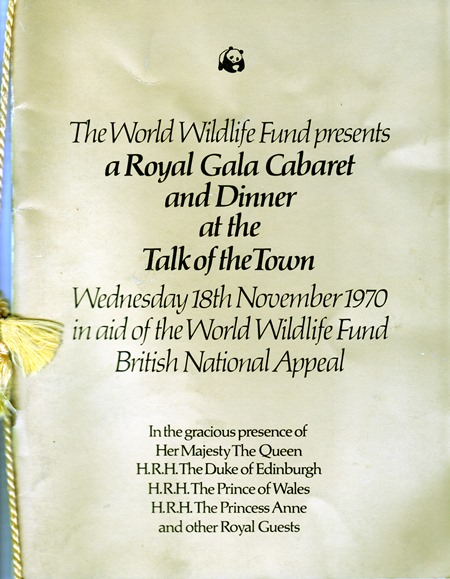
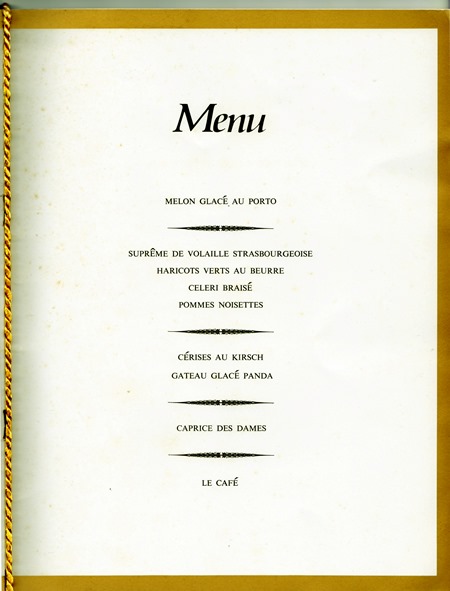
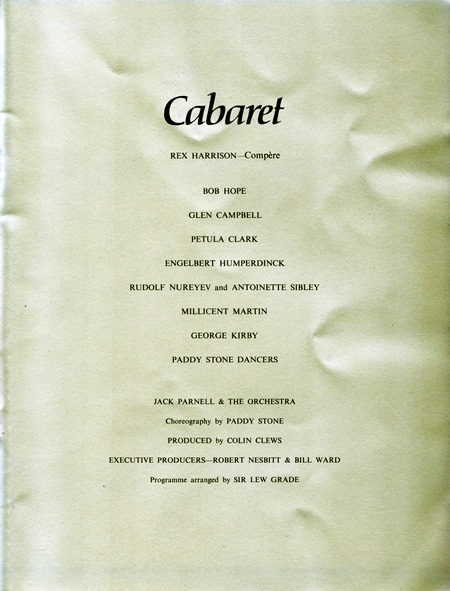
HW recorded the event in his diary entry the following day:
Last night was the Party at Talk of the Town – dinner & cabaret – for which I had paid £150 for 3 tickets. Lacking dinner jackets (Richard & John) we all went in dark suits. Plenty of champagne before H.M. The Queen (with H.M. of Holland) etc etc arrived. We had a good table on the first balcony above the circular base of the restaurant which was once a theatre. Below us the Royal party. Cabaret was mixed: excellent were Nureyev & Antoinette Sibley, Bob Hope (more or less) & Millicent Martin’s dancing: but Humperdinck etcetera was bloody awful, bawling his 10 million pound song ‘Please let me go’ with microphone to lips & odd caperings about the little stage.12 Richard said he saw H.M. with hands shielding her ears.
Richard & I were due to go by coach to Cambridge & Norfolk Nature Reserves this A.M. – I thought 10 AM – he said after telephoning 8.15 AM. So tired out, I failed to go . . .
And so, after a lazy morning, they returned to Sussex. Richard was very disappointed at not going on the trip, which was to Welney Marsh National Nature Reserve, which he had never visited. In due course HW made his way back to Devon.
The Gala Party was given considerable coverage in the press, and HW kept one or two news cuttings. This one is probably from the Daily Express on 19 November:

It was not, however, without its own controversy, as the cuttings show: chiefly the gaffe of many of the foreign Royals with their unfortunate wearing of ‘fur’ for the dinner (then, as now, a subject of controversy), despite the earlier appeal of Princess Beatrix of Holland (who apparently ignored her own plea). William Hickey, society diarist for the Daily Express, wasted no time in lambasting the guilty ones:

In the top row, named and shamed, are 'Queen Juliana in red fox; Beatrix of Holland, white mink; Margrethe of Denmark, light mink; Anne-Marie of Greece, white mink;Sonja of Norway, also in a white mink'. Hickey pointedly remarks, in the lower picture, that: 'The Queen and Princess Anne arrived furless – in fact coatless – at the Talk of the Town'.
So the Congress and the party were over. Most of those actively involved continued to work on behalf of conservation of wildlife, and so mankind. His part may have been very small within the conservation movement as a whole, but HW always lived his life according to its principles, and it was very definitely a large part of his personal ethos. As an early example, he was burning up abandoned rubbish on Putsborough and Croyde beaches and the Burrows in 1921 – now a century ago!
Fifty years on from that Congress we are still faced with the same dilemmas – only now the situation is even more desperate and urgent. I wonder if Jacques Cousteau would be as optimistic today. David Attenborough was upbeat for many years, but more recently has begun to issue dire warnings about man’s pollution of land and sea, although still with that note of hope.
It is very encouraging that so many young people are now making their voices heard. Whether any more notice will be taken of their protests remains to be seen.
It is not so much ‘When will they ever learn’ (as the song goes) BUT ‒ simply ‒ Will they ever learn?
If not, then the future for our planet is dire indeed.
*************************
Notes:
(After reading a note, click on the back button to go back to the text.)
- Sir Julian Huxley, FRS (1887‒1975), evolutionary biologist (brother of Aldous Huxley, author & poet).
- Peter Markham Scott (14 September 1909‒29 August 1989), artist, naturalist, author. Son of Captain Robert Falcon Scott (‘Scott of the Antarctic’) who died in March 1912 when returning from the South Pole. His mother Kathleen was a sculptress. She always pushed her son’s interests forward and was a very domineering parent: she subsequently remarried Edward Young (Lord Kennet). Scott was educated at Oundle and Cambridge, and then studied Art at Munich State Academy and the Royal Academy. In 1933 he moved into the East Bank Lighthouse at Sutton Bridge on the Wash, where he established a small collection of wildfowl and was able to paint. He also became an accomplished yachtsman and later became Chairman of the Olympic Yachting Team. During the Second World War Scott joined the Royal Navy and had an illustrious career, part of which was the invention of a camouflage scheme adopted by the Admiralty. In 1943 he married Elizabeth Jane Howard (novelist). She left him in 1947, when his mother also died. In 1945 he began to establish what is now the World Wildfowl Centre at Slimbridge on the Severn Estuary. Slimbridge has become the central focus for the study of various geese and duck. In 1961 the World Wildlife Fund was founded, and Scott became its first Chairman. Scott had also taken up competitive gliding, and in 1963 won the National Open Gliding Championship (beating HW’s son John Willie, as he was known, by a whisker!). Scott was knighted in 1973.
- Mary Hewitt, née Hibbert, was cousin of HW’s first wife Loetitia and bridesmaid at their wedding, with whom HW maintained a close relationship.
- Peter’s second wife, Philippa (his first wife Elizabeth Jane Howard later married Kingsley Amis and ended up living in Bungay just yards away from Lœtitia Williamson).
- ‘Return to Hell’: five articles in the Evening Standard, 29 June–3 July 1964. Reprinted in the Gliddon edition of The Wet Flanders Plain (Gliddon Books, 1987).
- Kerstin Lewes (later Hegarty), who had lived with HW briefly, acting as his secretary. See her contribution in the symposium Henry Williamson: The Man, the Writings, edited by Fr Brocard Sewell (Tabb House, 1980). Mary is Mary Hewitt, Loetitia's cousin.
- See the website entry ‘A New Forest Child’ for details on this item.
- The article is reprinted in Days of Wonder (HWS, 1987; e-book 2013), a collection of HW’s Daily Express articles from 1966 to 1971 which includes several important items, including the short series on ‘The Somme – Fifty Years After’.
- Barry Driscoll (1 December 1926–30 April 2006), wildlife artist. He had painted 3 large murals in the London Zoo in 1960, and had illustrated the inaugural brochure for the WWF in 1961. Driscoll illustrated an edition of Tarka the Otter in 1964.
- The series of articles ‘Save the Innocents’ are reprinted in Days of Wonder, op. cit., pp 92–98.
- This prestigious venue was originally the London Hippodrome. It was converted in 1969 by Bernard Delfont into a popular and successful nightclub. This became unfashionable in its turn, and closed in 1982. Today it is known once again as the London Hippodrome (with a casino).
- ‘Release me’ – as in ‘Please release me, let me go’ – by Engelbert Humperdinck was the best-selling record of 1967, topping the singles charts for six weeks and famously preventing The Beatles, then at the height of their fame, from achieving Number 1 with ‘Penny Lane’/‘Strawberry Fields Forever’. Many music fans would echo HW’s opinion of the singer!
*************************
Richard Williamson
RICHARD CALVERT WILLIAMSON
AN ILLUSTRATED PROFILE OF THE SOCIETY'S LATE PRESIDENT

Richard Calvert Williamson was president of the Henry Williamson Society from its inauguration in 1980 to his death on 21 May 2022 after a long illness bravely borne. He always took an active part in Society affairs and meetings, giving talks and writing the occasional article – and loved meeting members at the various rendezvous. Indeed, he is held by them in almost as much affection and esteem as his father.
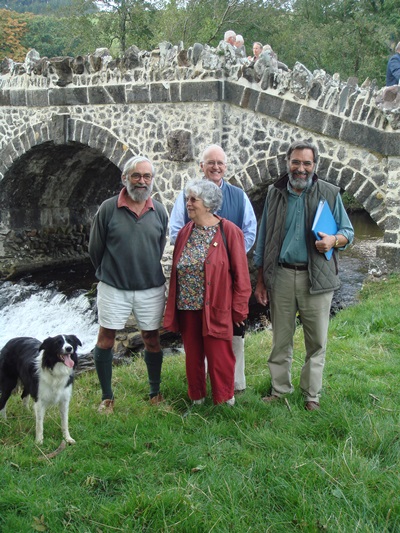 |
|
Richard and Anne Williamson, Robert Williamson and Tony Evans – not forgetting Tony's border collie Maggie (Henry Williamson Society Autumn Meeting, Shallowford, 2007) |
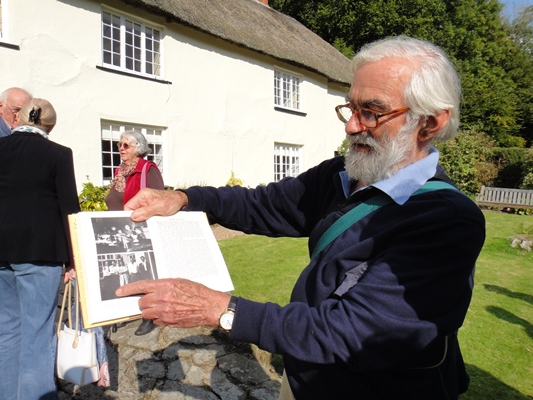 |
|
Richard at Shallowford, holding a copy of The Children of Shallowford (Henry Williamson Society Autumn Meeting, 2015) |
************************
Richard was born in Barnstaple, North Devon on 1 August 1935, the fifth child of Henry and his wife Loetitia. The family were then living at Shallowford, on the Fortescue Estate at Filleigh, situated on the edge of Exmoor. In The Children of Shallowford (1939) Richard features as the baby missing after a thunderstorm, who is found in the Deer Park sitting next to a fallen tree struck by lightning, playing with the daffodils.
The year following Richard’s birth HW bought Old Hall Farm in Stiffkey in North Norfolk (see The Story of a Norfolk Farm), so Richard spent his youngest years, the duration of the Second World War, on the north Norfolk coast. That his interest in nature was already present is shown by various anecdotes related by his father in newspaper articles written at the time and in the later volumes of A Chronicle of Ancient Sunlight, where he is Phillip Maddison’s son Jonny. Richard imbibed the natural life of the farm and the coastal marshes, encouraged by his father and also by the ornithologist Richard Richardson, whom he first met when aged eight.
 |
| Richard with his brother Robert outside the Old Hall, Stiffkey |
 |
| On the marshes at Stiffkey, the children identified by HW |
Richard’s first schooling was in the village school at Stiffkey, and for a short while at Botesdale, where the family moved at the end of the war, with the subsequent divorce of his parents. In 1950 mother and family moved to a small cottage on the outskirts of Bungay on the River Waveney. Richard revelled in being able to roam the marshes and explore the river in a canvas canoe. His main education was at St Michael’s College (a Worcestershire choir school), and then Blundell’s School, Tiverton, Devon.
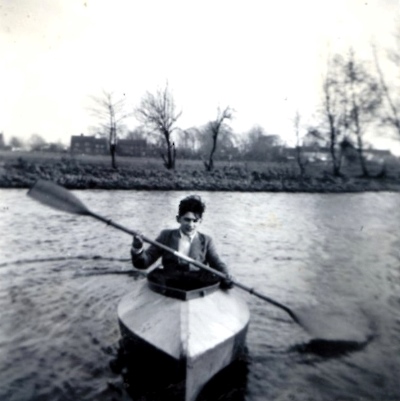
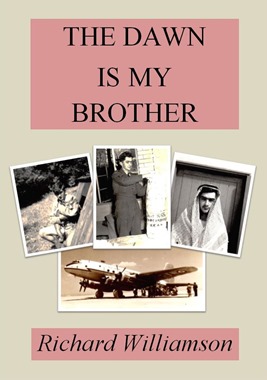
However, Richard was not a scholar, his interest from earliest years being that of a lone wanderer watching birds and observing natural history. He wrote the story of his quite idyllic time at Blundell’s in his first book The Dawn is My Brother (1959). This includes the cameo of his rescue and taming of a fox cub.
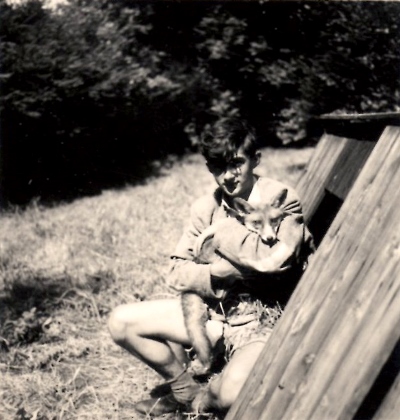 |
| At the Field, Ox's Cross |
After leaving school Richard joined the RAF and served for five years in radar stations in England, Iraq, Jordan and Cyprus during the extremely dangerous Suez crisis (being awarded the General Service Medal), so gaining valuable experience in life’s rich and wide panorama.
 |
 |
|
| First posting abroad . . . | and, somewhere in Jordan, receiving his home draft |
On leaving the RAF he worked in Forestry and on National Trust Nature Reserves in north Norfolk and Suffolk to gain experience to fit him for a career in what was then the Nature Conservancy (later English Nature, now Natural England).
His father encouraged Richard to write, and so while still in the RAF he began his first book, The Dawn is My Brother (Faber & Faber, 1959); it was reprinted as an e-book, newly illustrated with 29 photographs from the author’s own collection, by the Henry Williamson Society in 2015. The book was runner-up for the John Llewellyn Rhys Prize in 1959, and was considered an antidote to the then popular vogue of ‘kitchen-sink’ genre. It is a charmingly innocent story of his young life.
 |
 |
|
| Faber & Faber, 1959 | New illustrated e-book edition, HWS, 2015 |
At this time, after a hard day’s work cutting down or planting hundreds of trees, and cycling several miles to and from work, Richard also wrote a daily ‘wild-life correspondent’ article during 1957‒59 for the Daily Mail. He contributed to many other national newspapers and magazines over the years.
In September 1963 his perseverance in following his intention to join the Nature Conservancy paid off and he became warden of the Kingley Vale National Nature Reserve near Chichester, Sussex, famous for its ancient grove of yew trees; he remained in this post until his retirement in 1995, where he carried out continuous long-term weekly monitoring of breeding birds, butterflies and plants, particularly wild orchid colonies (and continued to do so, even though retired, until 2018). During his years as warden he hosted many hundreds of school parties, many from inner-city London, and inspired them with his enthusiasm and knowledge of every aspect of natural history.
He wrote two books based on his experiences at Kingley Vale:
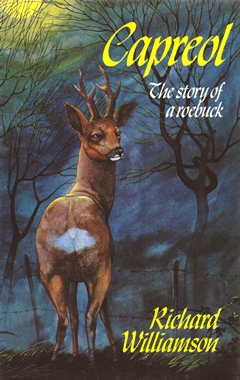
Capreol: The Story of a Roebuck (Macdonald, 1973; reprinted as e-book by the Henry Williamson Society, 2015): a novel about the life and adventures of a roebuck, situated on the South Downs and the nature reserve where he worked – akin in spirit to his father’s Tarka the Otter, and ending inevitably in the death of Capreol.
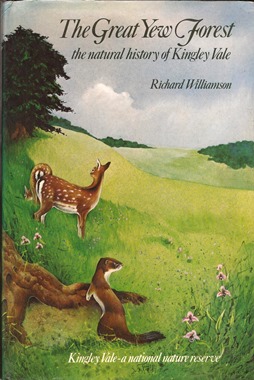
The Great Yew Forest (Macmillan, 1978): the story of his work in Kingley Vale National Nature Reserve (at the time it was on best-seller lists for the top twenty books of the month). This book includes records of the monitoring of plants, birds and butterflies. As more than 40 years has now passed since it first appeared, Richard is in the process of rewriting and updating all the information and including many new stories of natural adventures.
 |
 |
|
|
Macdonald, 1973 New e-book edition, HWS, 2015 |
Macmillan, 1978 |
Richard also carried out weekly breeding bird monitoring annually in the woods where he lives, and was one of the volunteers for the wildfowl counts in Chichester Harbour over the same period. He was instrumental too in gaining special status for Chichester Harbour by preparing the first report on its natural history value in the late 1960s.
In March 1964 Richard married Anne Brighton (who has managed the Henry Williamson Literary Estate since the author’s death; is author of two biographical books on Henry Williamson, many articles and the text for ‘A Life’s Work’ on this website; and for several years was editor of the Society’s Journal). They have a son, Brent (b. 1965, ballet dancer, lives in Portugal, and has 2 children), and a daughter, Bryony (b. 1966, drama and English teacher, has 1 son).
Richard and Anne lived in an isolated old gamekeeper’s cottage in the middle of a coppice wood on the estate of the late Edward James (an eccentric millionaire patron of surrealist art, with whom they were friends), in an area which is a nature reserve under the aegis of Sussex Wildlife Trust. The wood includes an extensive wild daffodil colony. Richard also carried out wild-life monitoring on this reserve and was chairman of its committee.
From 1964 to very shortly before his death he wrote the weekly wildlife column ‘Nature Trails’ for the Chichester Observer (and sister titles), together with other features, including for some time a ‘Local Character’ article highlighting many important people past and present in the area; an ‘Old Car’ feature in an associated magazine; and ‘Williamson’s Weekly’ in the West Sussex Gazette. His weekly ‘Williamson’s Walk’ feature was always popular. Richard was a well-known and popular local character whose work was thoroughly enjoyed by southern readers. Three books reflect this part of his life:
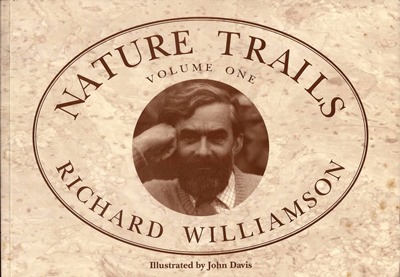
Nature Trails (Yew Tree Publishing, 1995): a compilation of a small selection of his weekly newspaper articles, illustrated by local artist John Davis.
52 Favourite West Sussex Walks (Summersdale, 2012): drawn from his weekly walking column with a wealth of natural history detail and illustrated with his own quirkily decorated hand-drawn maps.
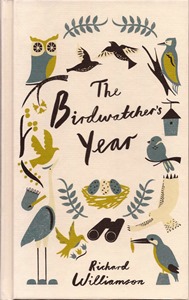
The Birdwatcher’s Year (Summersdale, 2013): a handbook full of facts, tips, and folk-lore for each month of the year.
 |
 |
After his retirement from the Civil Service Richard had more time to concentrate on writing and completed several books (to date unpublished), including the story of his service in Cyprus – Posted to Cyprus – at the time of the Suez Crisis. His story relates the rather extraordinary facts of the national situation surrounding the flare-up through a humorous and rueful view of a group of young airmen, including himself, aged just 21 and lovesick for the girl who jilted him the day before he embarked.
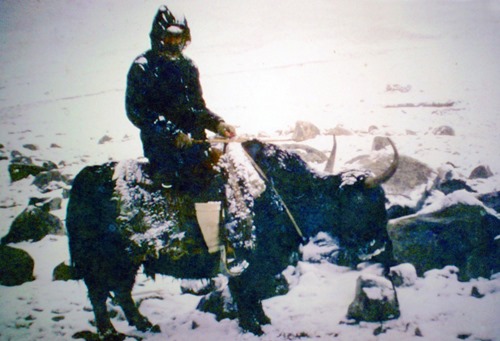
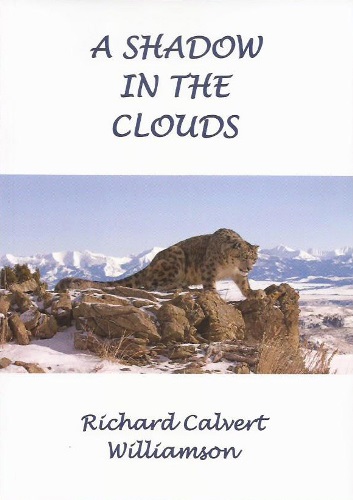
Also finished, and now published by the Society, is another story of a grand – and even dangerous – adventure in the Wakhan Corridor of Afghanistan in 1972 where (on special leave) he was sent by the BBC to garner information and write a synopsis for a proposed film on that magnificent creature, the snow leopard. Caught high in the Pamir mountains in the huge snowfall of early winter, he was lucky to get out alive. An internal coup the next year followed by the Russian invasion of Afghanistan meant that the proposed film was never made. A Shadow in the Clouds was published in May 2023 (paperback, 273pp, £6.50), and is available through the Society's Online Bookshop.
 |
|
In search of the snow leopard – Afghanistan, 1972 The author mounted on his yak in the Sargass Pass |
With Love from Russia, also as yet unpublished, is the story of a brent goose that becomes the go-between for an unhappy and rather frightened Russian girl living and working on the isolated northern island of Kolguev and an unhappily married pilot living on the South Coast near Chichester. The girl takes a brent goose egg and hatches it out. When the time comes for it to migrate to England she fixes a message to its leg in a vain hope that someone will see and understand. In Chichester Harbour the bird gets injured and rescued by a friend of the pilot, who does understand the message and so arranges to visit the island. He finds the girl, who by then is in the middle of a dangerous situation. After a seemingly unsolvable crisis, the story has a happy ending.
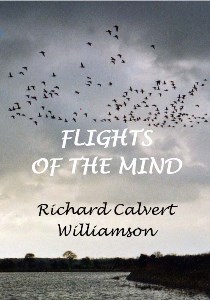
In the months before his death Richard started to write poetry and amassed a rather splendid collection of poems, published in February 2022, called Flights of the Mind (Yew Tree Publishing, paperback, 72 pages, illustrated by John Davis, £3.00). The 68 poems contained in the book form an anthology of his musings about nature – dormouse, butterfly, clouds – but chiefly about birds: their lives, habits, and myths.
Apart from natural history and writing, his main interests – indeed, passions – were classical music (particularly Beethoven), vintage cars, trains and planes, all things antique and historical – and literature, and he had a large and varied library reflecting these, all housed in an amazingly full and untidy ‘study’, as well as three Alvis TA14 classic cars (coupe, station wagon, and saloon) and an old BSA motorcycle, housed in equally full and untidy sheds. Richard liked to multi-task!
*************************
One of the poems from Flights of the Mind:
REDWINGS
What made those whispers,
Those shadows of sound,
As a young moon floated
Through mountains of cloud?
At last I could see them,
Like motes in the eye,
Or Mallory on Everest
Climbing too high.
The song was of redwings
From forests far north
Singing of summer
And the soughing of trees.
Yet suddenly, snow,
And the crossing of seas,
Dropping to shore-drift
Exhausted on tide-line,
Huddled on pebbles
Almost dying of cold.
Journeying onward
As of time old.
*************************
 |
|
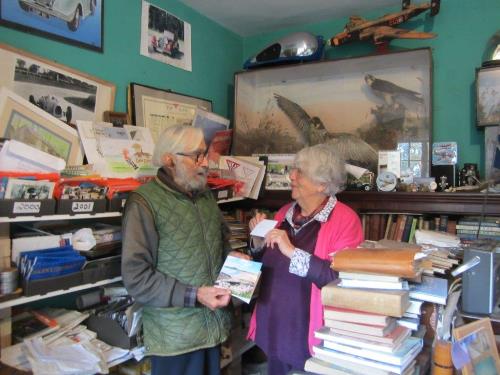
Anne presenting Richard with the Clarke Memorial Award for services to the Henry Williamson Society, Autumn 2019 |
*************************
Collected Nature Stories
COLLECTED NATURE STORIES
A second compendium of HW's early nature stories, comprising:
The Peregrine's Saga and other wild tales
The Old Stag and other hunting stories
Tales of Moorland and Estuary
With illustrations from the original editions by C. F. Tunnicliffe and James Broom Lynne
 |
|
| First edition, Macdonald, 1970 |
First published Macdonald, May 1970 (Matthews, Henry Williamson: A Bibliography, states 7000 copies) (£2.00)
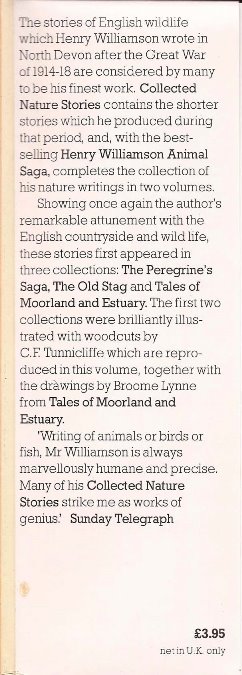
2nd impression (reprint), with new dust jacket, Macdonald and Jane's, 1976 (£3.95) (Matthews also gives a Book Club reprint for 1976)
3rd impression (reprint), Macdonald & Jane's, 1980 (£6.95)
Little, Brown and Co., paperback, 1995, with an Introduction by HW's son, Richard Williamson
There is very little background to be found within HW's personal papers. In October 1968 he had just finished dealing with the galley proofs of the last Chronicle volume, The Gale of the World, which proved difficult, and for various reasons was feeling very depressed – not least because of an obvious reaction to exhaustion, together with problems over a young female who was extremely crafty in manipulating his emotions. He was also at this time involved in trying to organise his affairs and property at the Field at Ox's Cross (the Writing Hut, Studio etcetera) into a Family Trust. This was all hugely complicated, drained him emotionally, and was mainly disastrous, although it was eventually achieved. Whereupon he promptly regretted it – realising he was no longer in charge of his own affairs! (This Trust was so complicated that after his death it was legally rescinded.)
On 20 December 1968 he noted in his 'Appointments' diary (the main diary is more or less blank):
I feel less melancholy, having at last started the Introduction & prefaces for the 3 phases, or books, of the HW Animal Stories. It comes easier & fresh as one alters, records, & finally simplifies.
But I have found nothing to indicate any discussion as to how this volume came about, although it is obviously a companion volume to The Henry Williamson Animal Saga, albeit published a full ten years after that omnibus.
The 1969 diary opens with a reflective passage with notes about the problems over The Gale of the World and reflections on life in general; it then continues on 2 January:

At the end of March HW was in London. This is the time of the showing of the Oh! What a Lovely War film and the subsequent problem over his review of it being turned down by the Daily Express – for further details about this episode, see the page for ‘Reflections on the Death of a Field Marshal’. On 31 March he recorded:
I spent some time at Macdonald's office, re how to reproduce Tunnicliffe woodcut 'pulls' – he gave me a set – without damage by block-making. Decided to have them photographed by Oswald Jones.
Those who have read the entry on The Henry Williamson Animal Saga will be aware that the original Tunnicliffe illustrations for those stories had not been included, and several reviewers noted and regretted this. No doubt a part of the reason for this decision was the difficulty in reproducing them. The original blocks would have been returned to Tunny – and possibly were past their useful life anyway, for the quality and sharpness of reproduction decreases with use and they had survived many reprints. HW's mention of 'pulls' concerns a set of very early printings on what was virtually tissue paper: very clear, but very fragile. One deduces here that Macdonald, aware of the previous criticism, had decided to reproduce the illustrations in the new volume. But this created its own problems. HW came up with what seemed an obvious solution. However the end result was not altogether successful – some of the illustrations are fine, others tend to be rather dark and lacking in the original superb detail.
It is evident that this photographic work by Ossie Jones is the reason behind his mistakenly being credited with taking the photograph on the back cover of HW on his Norton in 1921. Someone managed to muddle up the information!
HW returned to Devon on 3 April. That evening Ossie phoned to say he would bring 'the finished photographs of woodcut (for Collected Country Stories) tomorrow.' That was Good Friday that year.
4 April 1969: Ossie & friend arrived at 8.30 am, from London, after 3 AM start.
Also staying at that time were two sisters, who feature frequently in his diary entries at this period, and with both of whom he thought himself in love – despite others at the same time! All these young girls were understandably flattered at the attention for a short while: but very few of them had any real feeling for HW in return.
On Easter Sunday he recorded:
I invited a reader, John Gregory, to call: (apparently I gave him tea in the hut last year). He has collected many bits of my early (1920) Fleet Street articles & news items in the Weekly Dispatch – period June–Sept 1920. He had them all typed & neatly filed: I was surprised at my firm style & humour of those far-off days.
That reader – John Gregory – is today a stalwart of the Henry Williamson Society, and is the webmaster of this website, without whom none of this material would be online. John duly edited those articles into a privately published booklet, which was later reprinted by the HWS (see The Weekly Dispatch); he went on to collect and publish under the Society’s imprint the main part of HW's very numerous articles and similar writings, running into a considerable number of volumes. Without his dedication over many years none of these writings, which make up an important part of HW's total writing oeuvre, would be known or available.
The contract for the book was signed in early May 1969. HW's advance payment was £1,000: £500 on signing, £500 on publication – with a royalty of 10% on first 5000 copies sold, rising to 12% on the next 5000 and 15% after that.
HW now became engrossed in another see-saw relationship (with Annabel Cash – his letters to her are lodged at Exeter University), and there is no further mention of the new volume until 29 August 1969, when
I corrected galley proofs of the H.W. Collected Nature Stories. Found them very firm & austere style.
2 September: Finished 47 galley proofs of Collected Nature Stories this p.m. & posted at 5 p.m.
4 September: More galleys arrived this morning. I read six or seven in the evening.
5 September: Am correcting galley proofs of … They surprize me how good they are, or were.
He continued the next day, while also cutting grass at Ox's Cross; and on 7 September:
Made a fair copy of galleys 41-83 & posted it to Macdonalds to catch afternoon (4 p.m.) post to London.
The book was published in May 1970 – the actual date is not recorded by HW. But on 7 May he travelled to London to make a 15-minute recording:
on my 'new' Collected Nature Stories and also A Chronicle. The interviewer is Clive Jenkins who (he mentioned over the telephone) reviewed The Gale in New Statesman. . . .
3pm meeting with Jenkins, a nice fellow, 2 lovely young helpers – one a secretary, t'other sound adjuster, & his questions all about my work & not about me. I enjoyed it & so did he and the girls.
Later that evening he met up with Ossie Jones at Finch's pub (THE pub for artistic clientele) in Fulham Road, where he met Denis Val Baker's 'charming' daughter and they all had a good time – no doubt a celebration for the new volume. On this visit he met up with Ralph Leaver, his 'unseen' cousin back from South Africa, who features in the early Chronicle of Ancient Sunlight novels: 'an intelligent brown-faced man'.
*************************
Of the three titles involved in the collection the stories printed consist of:
10 (out of 15) titles from the 1934 edition of The Peregrine's Saga (illustrated by C. F. Tunnicliffe)
8 (out of 9) titles from the 1933 edition of The Old Stag (again illustrated by Tunnicliffe)
11 of the 12 titles from Tales of Moorland and Estuary (1953; illustrated by James Broom Lynne); the twelfth title is actually put into the first section, The Peregrine's Saga, as the opening story.
Full details of the original publications can be found under the individual title entries at the links above.
I would reiterate here the comment that the element of 'death', so prominent in all this early writing, is surely connected to the trauma of the First World War.
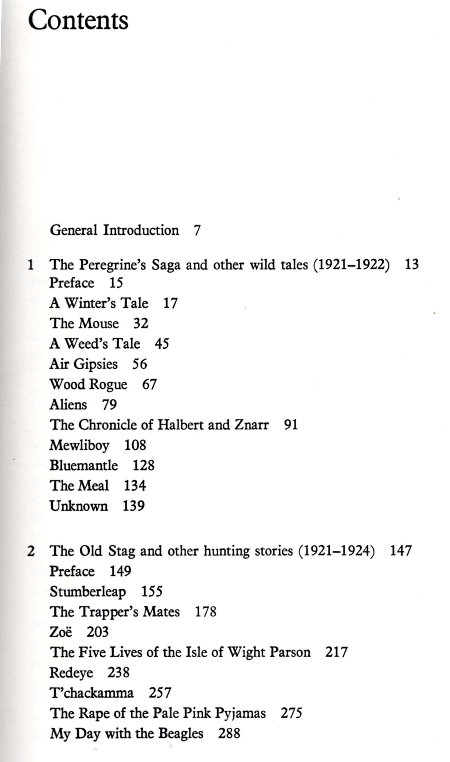
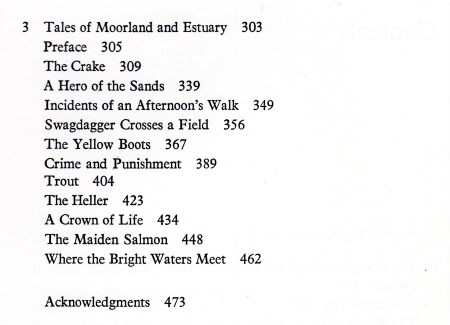
Richard Williamson's introduction to the Little, Brown & Co. 1995 paperback edition:


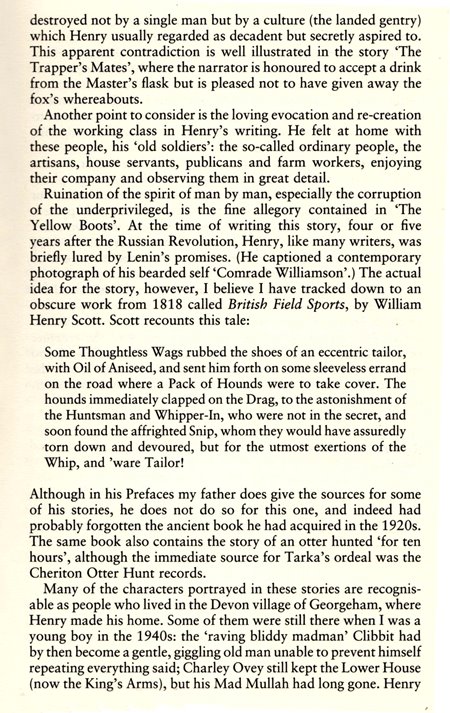

HW's General Introduction:


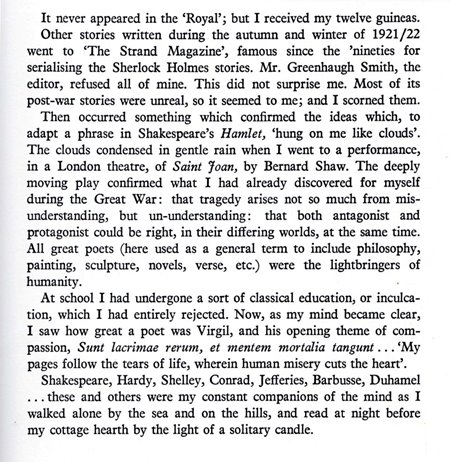


(HW's statement is not strictly true – his early books sold far better than he ever admitted to!)
There is a big problem here – not seemingly acknowledged by anyone anywhere! For the five titles that comprise the tale of Chakchek the Peregrine, the actual saga of the peregrine, are not present. They had already been printed as a unit under the title 'Chakchek the Peregrine' in the earlier Henry Williamson Animal Saga volume. So there are no peregrine stories present under this title here. This led to the 1982 Macdonald Futura paperback edition of The Peregrine's Saga – very evidently set from this present text – being printed without containing any actual peregrine stories, making a nonsense of the title. Readers must have been puzzled and perhaps disappointed and annoyed. (In my own defence, as signee on behalf of the HW Literary Estate, I was confronted here with a fait accompli, and did not have the knowledge then to appreciate what had happened.)
However, the plan of placing 'A Winter's Tale' as the opening story – somewhat chilling though the tale might be – was an excellent decision, as it puts the writer setting out from London en route to Devon on his writing career (even though we know that he did not ever walk down to Devon!). The stage is set – and is followed with all those lovely early, poignant, stories, as fresh as ever.
 |
|
Bluemantle & his mate skimming the brook – note the church reflected in the water |
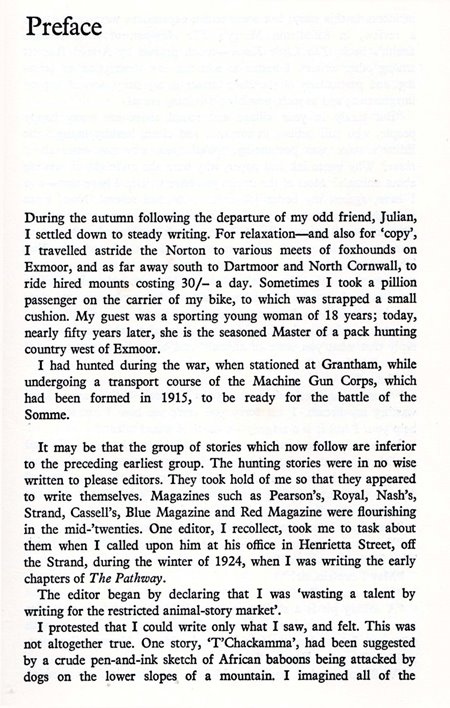
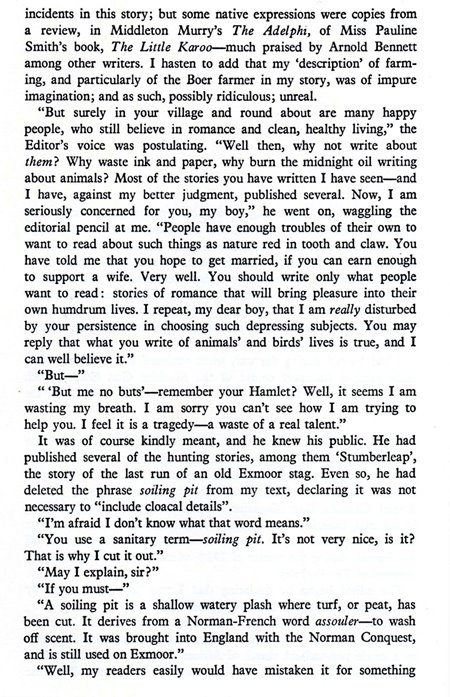


Eight stories from the 1933 edition are included, but HW moves the last story in that book, 'Stumberleap', to the opening here, for this is the major story: Stumberleap is the 'Old Stag'.
Again, three parts from the 1933 edition are omitted: those stories that make up 'The Epic of Brock the Badger' had already appeared in the Henry Williamson Animal Saga; but here that doesn't present a problem.
 |
|
Stumberleap braves the fast swirling water of the deep cleave beyond Hunter's Inn |
Fed by a hundred torrents, the river rose many feet, and when the storm ceased an hour later a muddy stain was spread in the sea at its mouth. Beyond the stain, swimming in the rolling waves, was Stumberleap, and after him, fifteen and a half couple of stag-hounds.


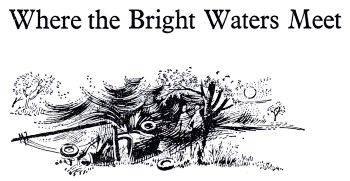
HW includes eleven of the twelve original stories in this section; the twelfth, 'A Winter's Tale', having being moved to become the opening story of the book. That he changed the running order is hardly material. The dedication of the original edition to 'Miss Imogen Mais' (daughter of his great friend, Petre Mais) is not included here. James Broom Lynne only provided chapter-heading vignettes as illustrations. (They are all reproduced in the page for Tales of Moorland and Estuary.) The stories include the marvellous tales 'A Crown of Life' – tragic both in its portrayal of Clibbit Klift and his faithful dog; the superb, surreal 'The Maiden Salmon', and the ghostly 'Where the Bright Waters Meet'; and so Collected Nature Stories ends with that story's poignant closing words:
We sat by the river, in the shade of the beeches near the waterfall. We did not need to speak. It was so peaceful, watching the shallow stream rippling over the ford, where the white flowers of crow's-foot on long green bines were ever waving in the current seeking to drown those slender lengths. The grey wagtail flitted from stone to stone, the dipper sang its rillets of song. The bright waters flowed to the sea and the sky, I with them.
As an aside, HW objected to the original illustration that Broom Lynne had produced for this last story, and asked something more pertinent to the unearthly theme of the tale; this is the vignette finally decided upon:
*************************
Rather surprisingly after the huge amount of attention given to the previous compendium, there is only a handful of notices for this volume, all short ones. That is a pity, but the titles were of course rather less known, although there is no doubt that the book sold well. It may be that at this stage HW just put the reviews to one side and they became lost.
Sunday Times, 17 May 1970:

Express and Star (Wolverhampton), 30 June 1970:
The Times Literary Supplement, 2 July 1970:

To which HW responded in riposte:

(The TLS published this in its issue for 16 July; as almost always happened, HW's attempts to explain himself unfortunately just seemed to make matters worse.)
The Yorkshire Post (Barbara Hardcastle), 30 July 1970:

Daily Telegraph, 26 August 1970:
Contemporary Review, September 1970:

The Countryman, Winter 1970:

*************************
The first edition, Macdonald, 1970, front cover designed by Barrie Carr and based on a woodcut by Charles Tunnicliffe (found on p. 137), depicting cunning Reynard drinking thirstily after being holed up for four days and nights.

The back cover (here turned on its side) featured a photograph of HW on his Norton Brooklands Road Special motorcycle outside Vale House in Georgeham in 1921. (But not, as credited, taken by Oswald Jones, whom HW did not meet until the 1950s.)

Front and back flaps:
 |
 |
**********
2nd impression (reprint), with new dust jacket, Macdonald and Jane's, 1976, front cover:

The back cover featured a photograph of HW taken by or for Macdonald at the time of publication of The Scandaroon, published in 1972:

Front and back flaps:
 |
 |
**********
Little, Brown and Co., paperback, 1995, front and back covers; the superb front cover drawing is by David Frankland:
 |
 |
And title page to this edition:

*************************
The Henry Williamson Animal Saga
THE HENRY WILLIAMSON ANIMAL SAGA
A compendium of four of HW's best-known earlier stories about animals, consisting of:
Tarka the Otter
Salar the Salmon
The Epic of Brock the Badger
Chakchek the Peregrine
 |
|
| First edition, Macdonald, 1960 |
First published Macdonald, February 1960 (5000 copies) (21/-)
Reprinted in April 1960; May 1963; 1968 (price 30/-); 1974; 1975, and 1978 (price £5.95)
(Matthews, in his Henry Williamson: A Bibliography (2004), refers to the fifth, sixth and seventh impressions as being published by Book Club Associates, though copies of these impressions in the HW archive have the imprint Macdonald & Jane's)
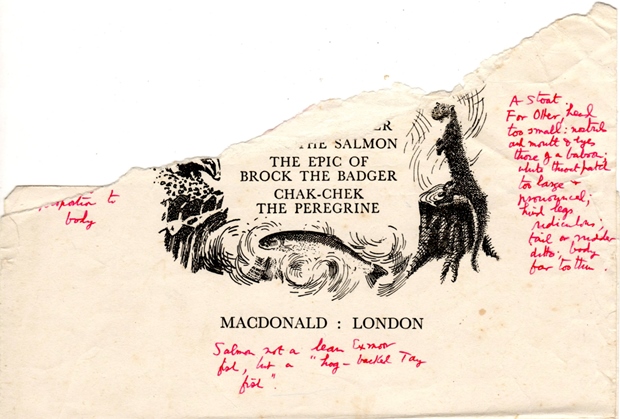
That HW evidently did not like the cover design is shown by this torn scrap from a galley proof – a pity some is missing!
There is not very much background information for this important compendium. The first reference seems to be in his diary on 3 March 1959:

HW then set to work on the structure of the book, as the following pencilled notes show:

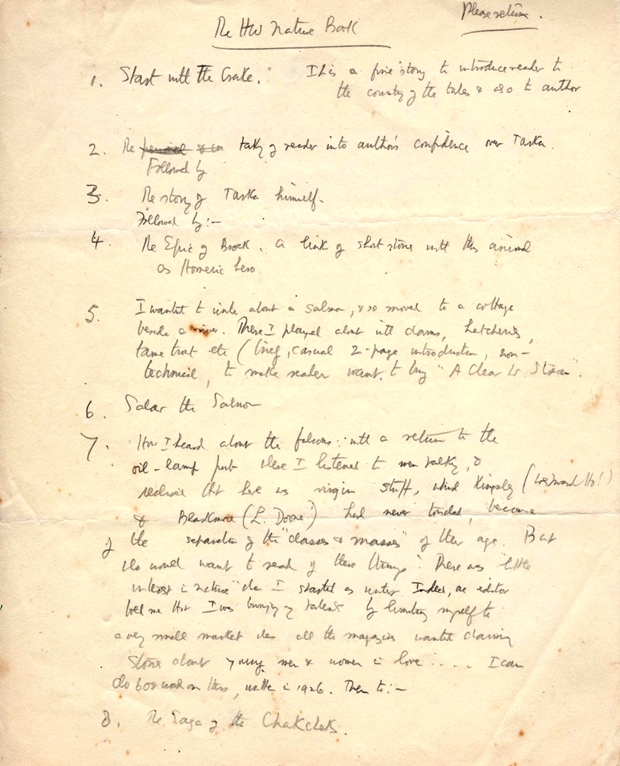
Then, on 9 April 1959, he notes:
To London, to see Faber & Macdonald over the much-harassing Animal Omnibus volume which Macdonald want to do this autumn. If it isn't done I'll have no money. . . .
Although on the surface it would seem to have been an easy book to prepare, that was not really so. Having decided what he wanted to use, there seem to have been considerable problems over obtaining permission from the different publishers involved to use the items planned for the volume. Noticeably, the illustrations by C. F. Tunnicliffe were not used (to the disappointment of some reviewers). Then, to make the work into a 'whole unit', HW decided to write new 'linking' or introductory passages, which took considerable time and energy. It should be noted perhaps that some of HW's statements in these new introductions have their own decided fictional element. As an example, the story of HW nursing his baby son while writing Tarka the Otter is known to be highly exaggerated – but it makes a very good tale! Regular readers and browsers of this website will note these with a smile of amused recognition.
At this time HW was hard at work writing 'No. 8' of A Chronicle of Ancient Sunlight – A Test to Destruction – and so his energies and thoughts were mainly concentrated on that. His comment about having no money was due to the fact that, because there was no volume of the Chronicle to be published in 1959, no lump sum advance was forthcoming. Also at this time yet more time and nervous energy was being spent on the problems involved in the renovations being carried out at the Ilfracombe cottage.
Diary entries:
10 April 1959: Saw Roger Lubbock of Putnam & Co who agreed in principle to allow Tarka & the badger & falcon epics into the animal Book, on a 3% royalty. I went to Faber & asked Kennerley (Morley) if they would reconsider allowing me to have Salar in, despite the new paperback 5/- edition, on a 2% royalty. I would have a 5% royalty. He said he'd have to ask Crawley the Sales manager-director. I telephoned this to Cyrus Brooks [his agent at A. M. Heath] & said I'd let him know the results.
14 April 1959: No letter from Morley Kennerley about including Salar, so I presume they don't want to release it. Goodbye to the Animal Book & £400 advance to carry on the 2 families this year!
22 April 1959: Wrote to Morley Kennerley of Fabers – not having heard from him – and said I quite understood about Salar in paperback having a run unencumbered by the Omnibus in the river, & would he forgive me for having been so persistent.
(And, although there is no mention of it – this letter would seem to have produced a positive response.)
On 27 April, having put his wife and son on a train from Bristol to Yorkshire (to stay with Christine's mother) he met up with Eric Harvey (a director at Macdonald) at Bath:
We discussed the forthcoming Animal Saga. I stayed the night, enjoying myself as usual in the company of this sound, good family. Eric is worried about the threatened printers' strike [and its effect on small publishers and newspapers].
From there he made his way, via S. P. B. Mais in his new house in Oxford ('less farouche and bitter'), to Bungay where he stayed a week – meeting up with Adrian Bell and also Lilias Rider Haggard – and taking his son Richard back to Devon with him for a month's work.
Before he left Bungay on 4 May, he wrote to Eric Harvey; the archive carbon copy is dated 2 May 1959:


The contract was signed on 29 June 1959, giving an advance of £200 on signature of contract, £200 on publication, with a royalty of 10% (the first printing of 5000 copies would have earned HW a total of £525).
Then on 22 January 1960:
The H.W. Animal Saga to be published to day. [And added later] Postponed to 7 Feb.
An old envelope contains a small number of typescript pages relating to the writing of the book. Mainly these are duplicate copies of the various new 'Introductions' for the four parts. The inclusion of a few pages of 'The Original Ending' of Tarka the Otter shows that HW intended to use that here at an early stage – but evidently either he or the publisher later decided against doing so.
The envelope also contains a few MS fragments relating to various sections of the book:
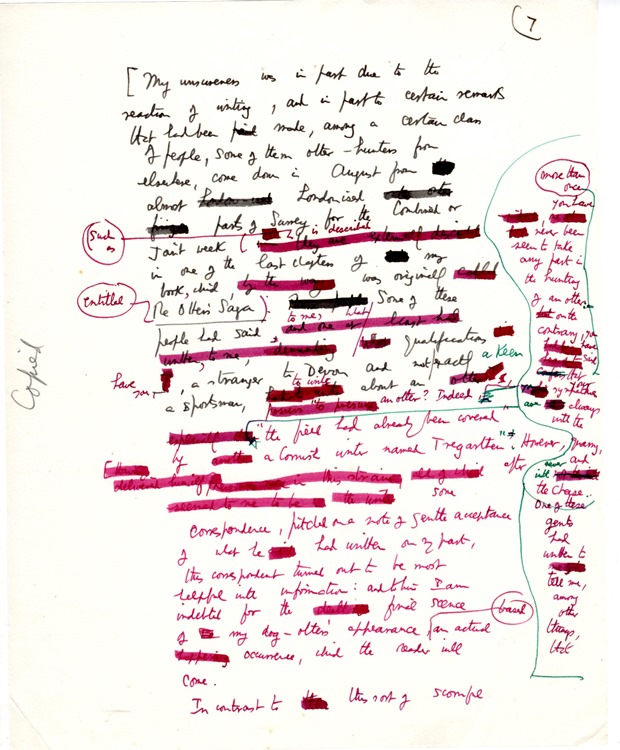

and on the reverse of this headed paper:

*************************
Contents page:
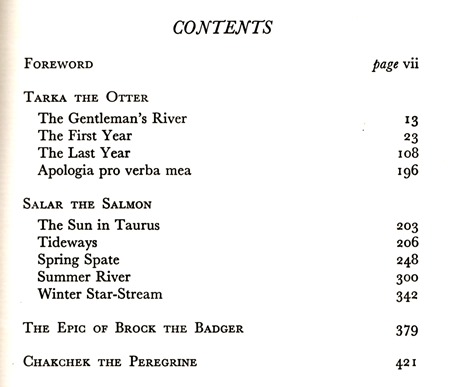
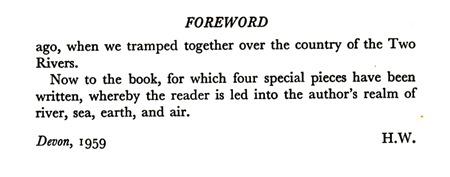
The Foreword:

Tarka the Otter (pp. 11‒199) (Matthews calls this 'the Fifth Text', in that there are a few small alterations to the text.)
The dedication has been extended:

There is a new 'Introduction' by HW: 'The Gentleman's River' in which HW gives the background to the original writing; this is a version of an article first printed in Country Life (4 July 1952), where it was accompanied by some very nice photographs of the countryside. This was reprinted in HWSJ 33, September 1997. At the end an 'Apologia pro verba mea' reprints a list of unusual words and their meanings as found in the book, which some critics had complained about (to HW's annoyance) when it was originally published. The ‘Apologia’ was first printed in The London Mercury, whose editor, Jack Squire (later Sir John) was instrumental in putting Tarka the Otter forward for the Hawthornden Prize.
Full details about the story itself can be found within the entry for Tarka the Otter.
***************
Salar the Salmon (pp. 201‒375) (Matthews gives this as the 2nd text with additional material.)
There is a new introduction by HW, 'The Sun in Taurus':
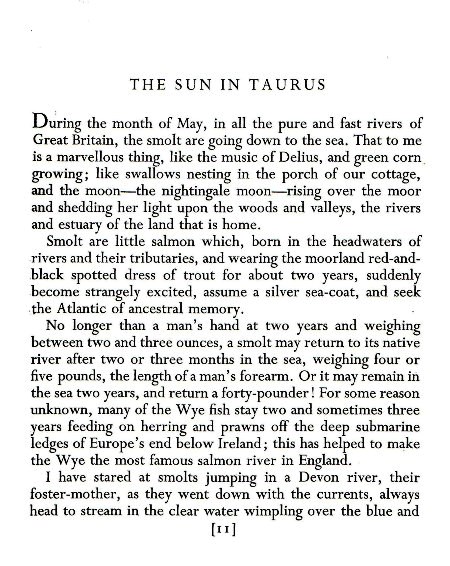

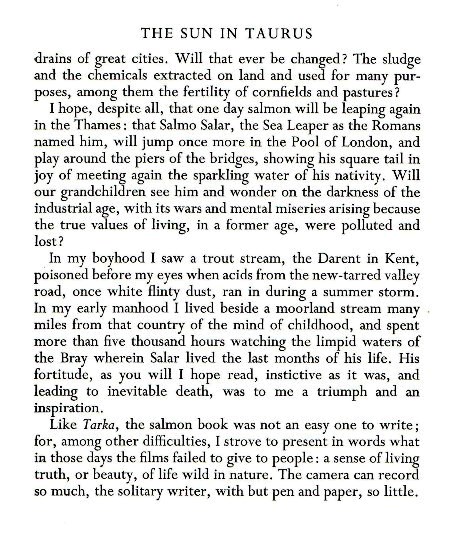
There is also an Epigraph (not noted in the list of Contents): 'A Personal Note', which gives in charming manner the background to the writing of the book:
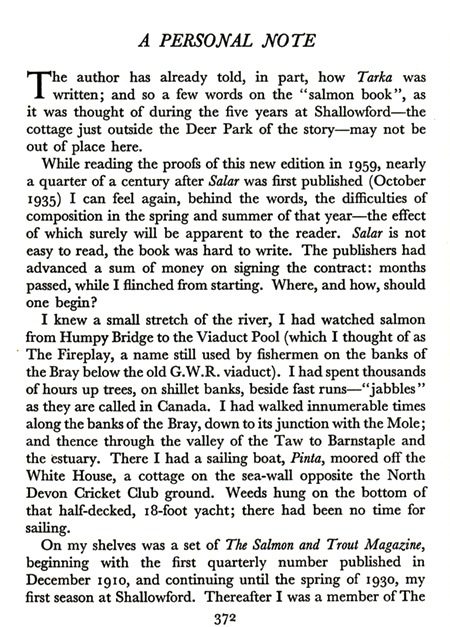


Full details about the background and the actual story can be found in the entry for Salar the Salmon.
***************
The Epic of Brock the Badger (pp. 377‒417), as published in the revised illustrated edition of The Old Stag (Putnam, 1933), where stories originally published in a variety of sources were brought together thus:
'Bill Brock's Farewell' part I – from Outsiders, 1929
'Bloody Bill Brock' – from The Peregrine's Saga, 1923
'Bill Brock's Good Turn' – from The Old Stag, first edition, 1926 and was originally published in Saturday Post and Pearson’s Magazine in 1925.
'Bill Brock's Farewell' part II – from Outsiders, 1929
Here the stories are simplified into three parts:
1) 'Early Days'
2) 'Fang Over-lip'
3) 'The Triumph of Bill Brock'
Again there is a new introduction describing their background, which in 1960 was 'new' information regarding HW's real life, and would have been of great interest to his readers:
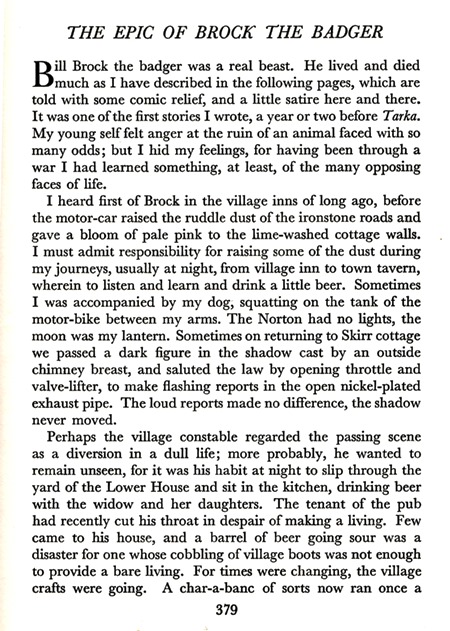
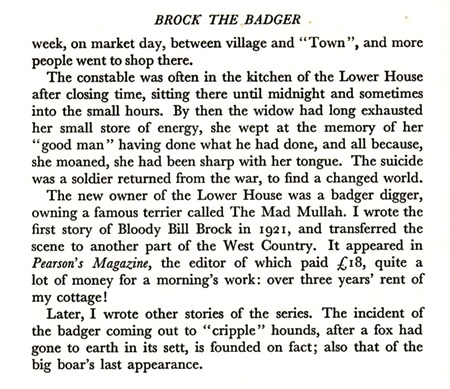
(The Pearson’s Magazine referred to by HW was an American periodical.)
***************
Chakchek the Peregrine (pp 419‒77), as published in revised illustrated edition of The Peregrine's Saga (Putnam 1934):
'The Backbreaker's Bride' (originally in Harper's Magazine, 1932 and Windsor Magazine, 1933)
'No Eel for Nog' (from The Old Stag, 1926)
'The Raid on London' (from The Old Stag, 1926)
'Love and Death of The One-Eyed' (The Peregrine's Saga, 1923; first published in Hutchinson's Magazine, 1923)
'The Vigil of Mousing Keekee' (The Peregrine's Saga, 1923, where its title is 'The Saga of Mousing KeeKee’)
These titles are simplified here as:
1) 'The Backbreaker'
2) 'No Eel for Nog'
3) 'The Raid on London'
4) 'Love and Death'
5) 'Mousing Keekee'
Full details of these stories can be found in the entry for The Peregrine's Saga.
There is a further new introduction by HW:


The last paragraph of this section (and so of the book) is included here, as its theme – that the soul lives on as a star – is one which is found also in The Star-born and The Gold Falcon. HW could not have ended his book on a more uplifting note:

*************************
The book was given a great deal of critical attention, as is shown by the large number of reviews – some shorter items are not included here. They begin with the usual 'alert' in The Bookseller which also includes mention of Malcolm Elwin.

Smith's Trade News, 21 November 1959, reveals a TV programme, as does the monthly British Books, February 1960:

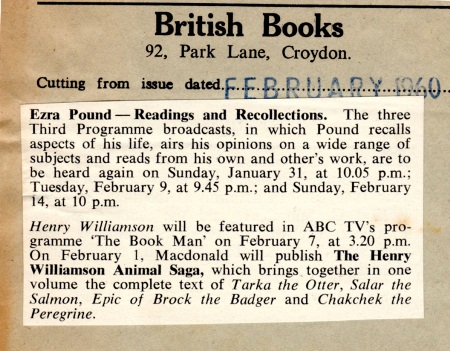
HW noted in his diary on 16 November: 'Bristol – on programme View 10.30 pm. Leave early morning & meet Bob Waller.' And again on 18 November: 'BBC television, Tonight, 6.50 pm.’ Neither entry fits the above – of which he makes no mention.
Smith's Trade News (‘Whitefriar’), 30 January 1960:

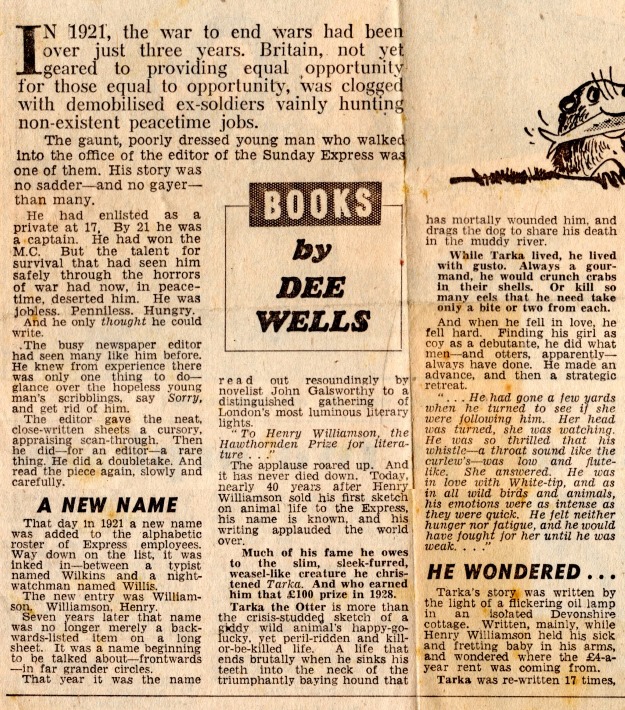
Sunday Express (Dee Wells), 31 January 1960. HW must have been considerably annoyed – and upset – that the reviewer repeated Kenneth Allsop's erroneous statement, made when reviewing The Golden Virgin in 1957, that he had been awarded the MC. The 6-column full-page review was accompanied by this magnificent caricature by the Australian cartoonist and illustrator Bill Martin:

For the sake of legibility the columns are presented below in groups of three.

Sunday Graphic (Maurice Wiggin), 31 January 1960:

North Devon Journal, 28 January 1960:

The Irish Press, 30 January 1960:

John O' London's Weekly, 28 January 1960:
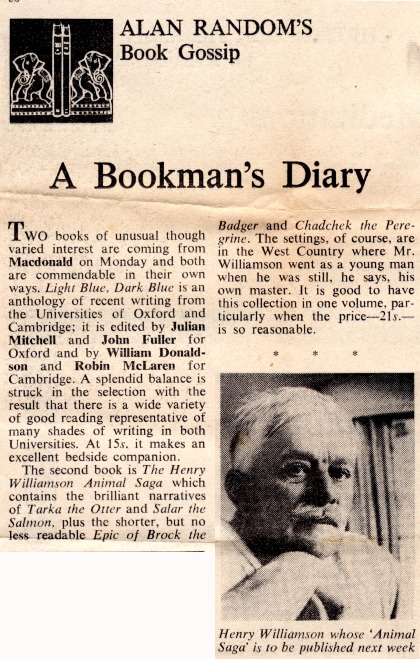
North Devon Journal (Alfred E. Blackwell), 4 February 1960:

Western Morning News, 4 and 5 February 1960:

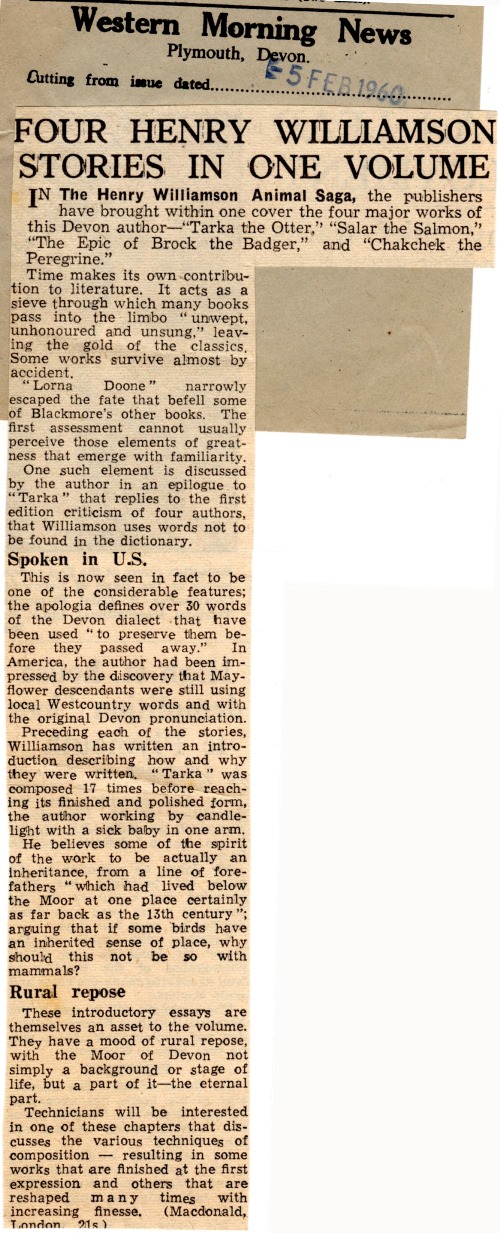
East Anglian Daily Times, 4 February 1960:
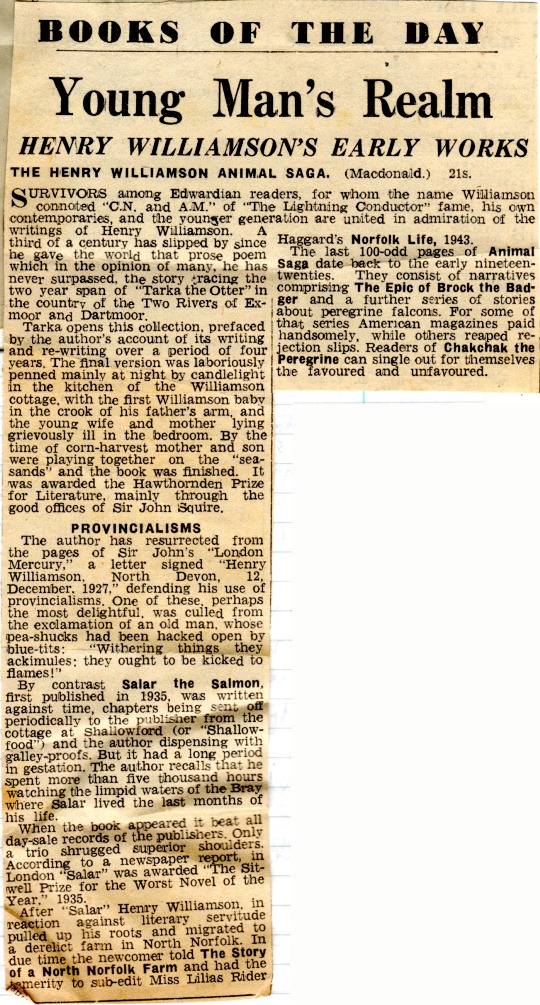
Guardian (Geoffrey Moorhouse), 5 February 1960:

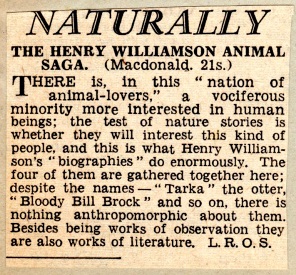
Birmingham Post (L.R.O.S.), 9 February 1960:
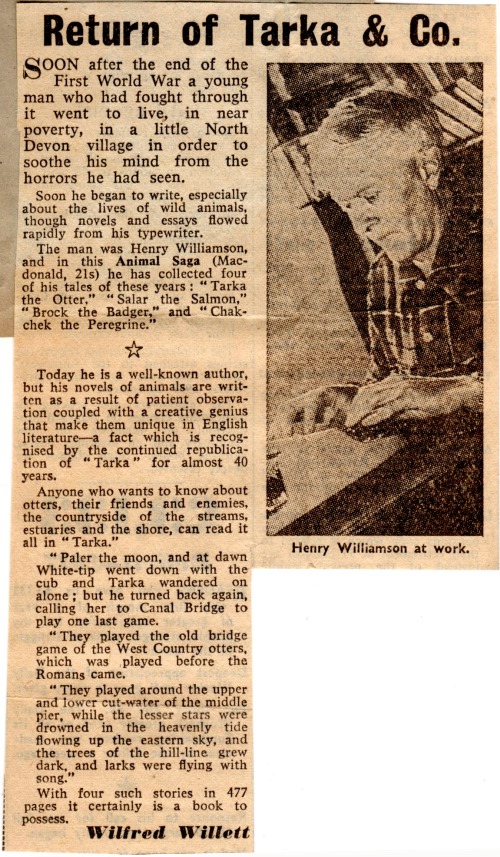
Daily Worker (Wilfred Willett), 11 February 1960:
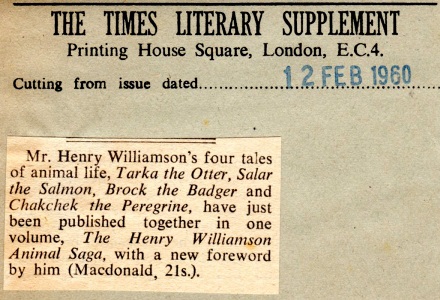
The Times Literary Supplement, 12 February 1960:
Illustrated London News, 13 February 1960:

The Sunday Times (Maurice Wiggin), 14 February 1960:

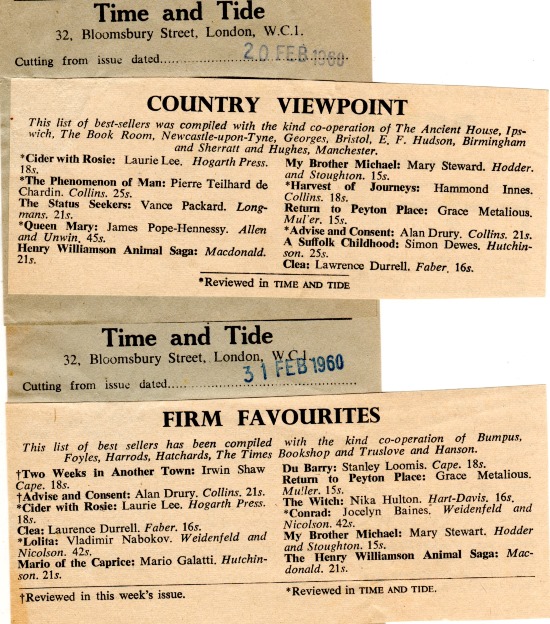
Time and Tide, 20 February 1960 (giving current list of best-sellers); and Time and Tide, 31 February 1960 (it’s interesting to note the other books on the lists):
Liverpool Daily Post (E.H.), 24 February 1960:

Express and Echo (Exeter), 26 February 1960:

Eastern Daily Press, 26 February 1960:

Irish Times (J. MacC.), 27 February 1960:

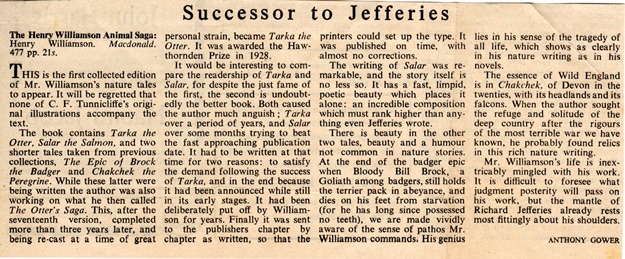
John O' London's Weekly (Anthony Gower), 3 March 1960:
Books and Bookmen, March 1960:

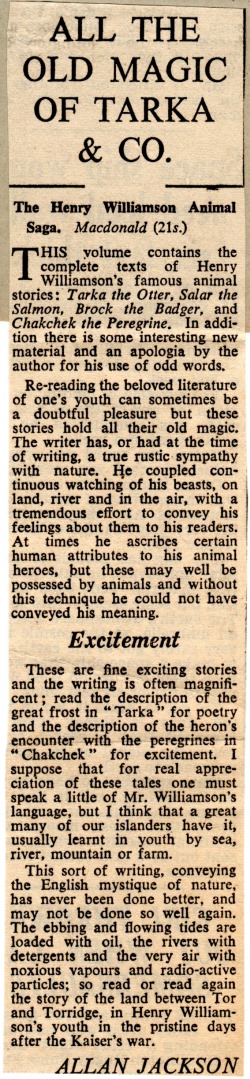
Allan Jackson syndicated his review in several newspapers in early March (all identical) – Doncaster Gazette, Skyrack Express (Tadcaster), North Wales Pioneer, Pontefract Express, and Bridlington Free Press:
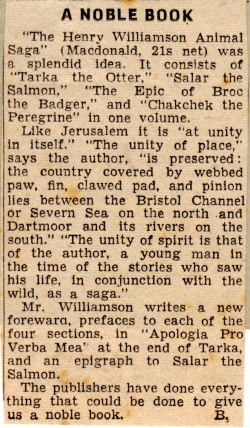
Belfast Newsletter (B.), 19 March 1960:
The Bookseller, 26 March 1960 ('Henry Puffmore' was a pseudonym for various Bookseller staff members):

The Time & Tide review mentioned is, sadly, not in the archive file.
Contemporary Review (Grace Banyard), June 1960:
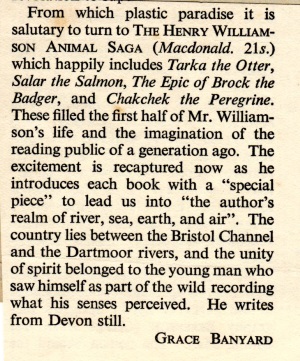
(One wonders what the 'plastic paradise' book was!)
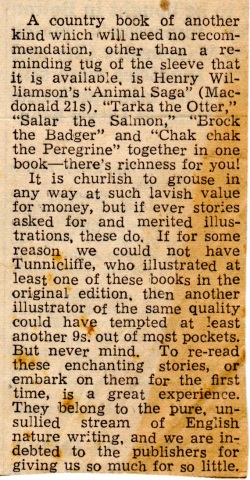
Bolton Evening News (Rachel Singleton), 14 April 1960:
*************************
A small number of reviews of the later reprints are also in the archive, but they do not add anything to the critical overview.
*************************
The first edition, Macdonald, 1960. HW did not like the cover illustration, particularly the image of the otter, as his scathing note note on the galley proof shows (at the top of this page).
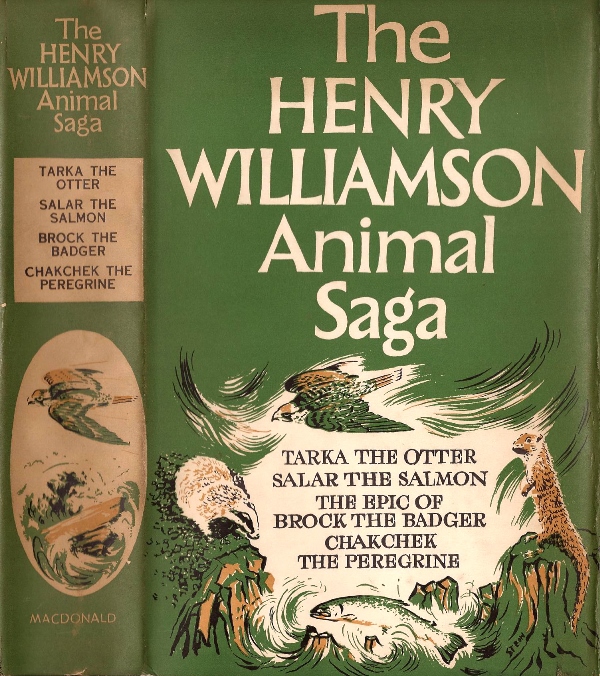
Front and back flaps:
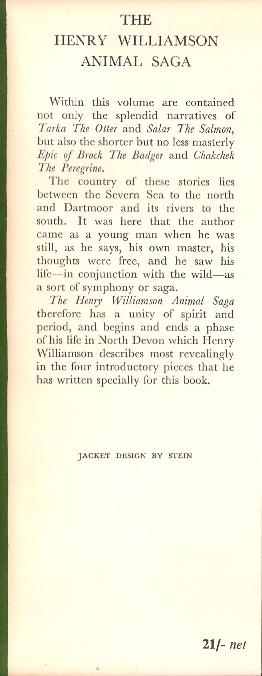 |
 |
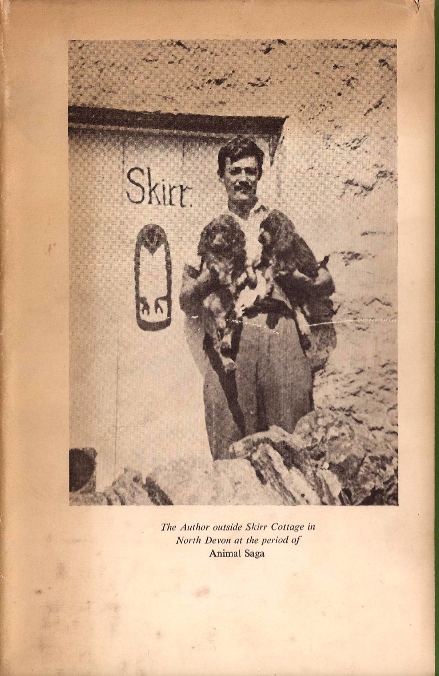
Back cover:
***************
Seventh impression, Macdonald & Jane's, 1978, front cover and flap:
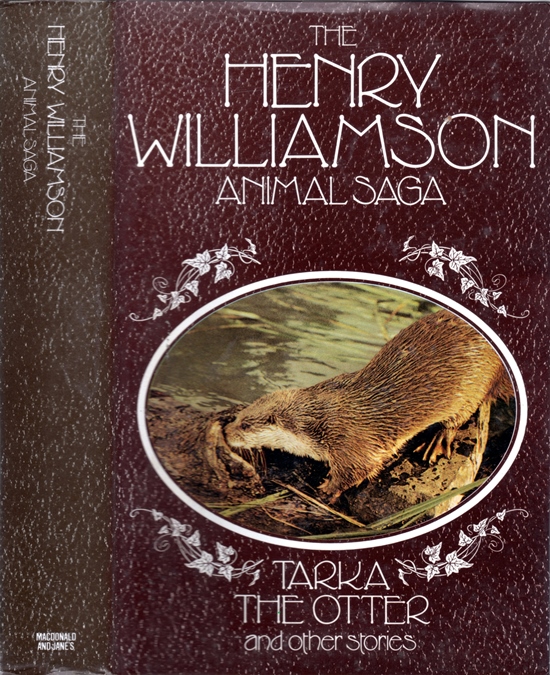

Back cover:
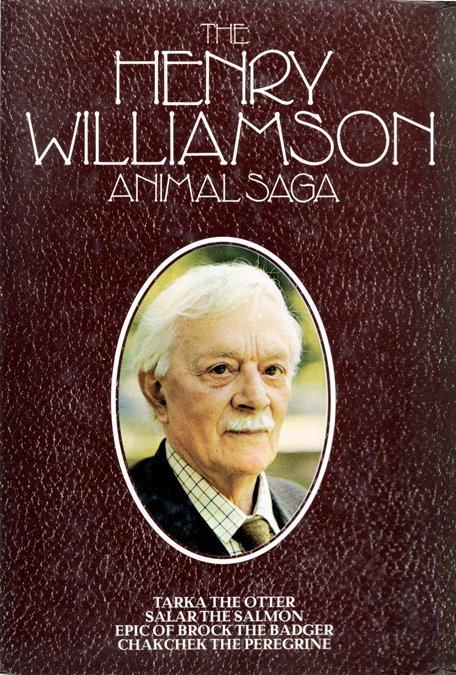
********************