
HENRY WILLIAMSON,
WRITER, 1895–1977
 |
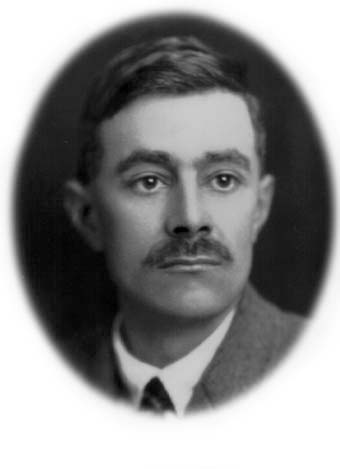 |
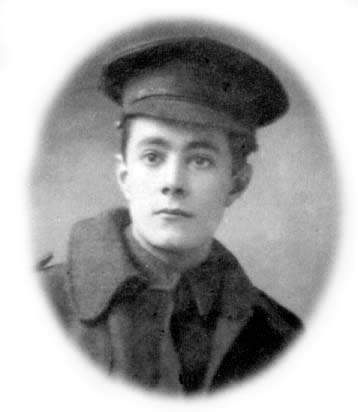
| A young soldier in 1915 | The mature writer in the 1930s |
Key Dates in the life of Henry Williamson.
Biography pages which briefly explore and explain his life and work, compiled by ANNE WILLIAMSON on behalf of the Henry Williamson Society.
Henry Williamson: Dreamer of Devon
HENRY WILLIAMSON is mainly known as the author of Tarka the Otter, a book praised by Thomas Hardy, John Galsworthy, Lawrence of Arabia, and many others, and which won for him the prestigious Hawthornden Prize for Literature in 1928. But this controversial and eccentric man actually encompassed an enormously wide range of writing from his life’s experiences:
— soldier, writer, broadcaster, naturalist, farmer and, above all, visionary writer —
In fact, he wrote over fifty books, including:
- THE FLAX OF DREAM – his early four-volume tetralogy
- TARKA THE OTTER
- SALAR THE SALMON
- THE PATRIOT’S PROGRESS – a stark story of the First World War
- A CHRONICLE OF ANCIENT SUNLIGHT – a fifteen-volume, semi-autobiographical saga which details the life of Phillip Maddison and his family from the turn of the century until the 1950s.
Born in south-east London in 1895, Henry Williamson’s love of nature was instilled from an early age. From the then semi-rural London suburb of Brockley he was within easy access of the Kent countryside and roamed there freely. Although his father loved cycling, collecting butterflies and moths and flying kites, his strict unbending Victorian attitudes were the cause of much unhappiness in the home. Father and son could not communicate; beatings were frequent. School was an escape but contained its own horrors. But on his mother’s side there were relations in Bedfordshire to which frequent visits were made, and which provided a more relaxed atmosphere. These early years and the atmosphere of life at the turn of the century are recaptured in the early Chronicle of Ancient Sunlight volumes.
Henry Williamson spent a holiday in North Devon just before the outbreak of the First World War, and becoming enthralled with the wild scenery so in keeping with his own sensitive and passionate nature, he vowed to return. He was a soldier in the First World War and there are several books detailing those traumatic years. After the war was over he determined to become a writer. In 1921 he left home and went to live in North Devon. Many early books paint a portrait of a long-vanished country life in the Devon village of Georgeham. The Second World War found him a farmer in Norfolk, determined that sound agriculture was the answer to England’s problems. Again his experiences, hopes and dreams are recorded in several books. After this war was over, he returned to Devon where he lived for the rest of his life, writing A Chronicle of Ancient Sunlight.
Henry Williamson’s temperament was difficult and artistic. His lively mind had the power of total recall. His opinions were emphatic and idiosyncratic. Although a loyal friend he frequently offended people and upset many. Influences on his life included Richard Jefferies, W. H. Hudson, Francis Thompson, Richard Wagner and Delius, while he was proud of his friendship with T. E. Lawrence. He was a man of contrasts and contradictions.
Above all he was a great writer. His basic belief was in ‘the power of ancient sunlight’ and he sought to see the world as the sun sees it – without shadows. His descriptions and natural history detail and his evocation of the atmospheric moods of nature are part of the great heritage of English natural history writings. His descriptions of life in the trenches at the time of the First World War, based on first hand experience, are considered by many to be the finest of their kind, while the great work of his mature years, A Chronicle of Ancient Sunlight, stands as a true statement of the social history of this country in all its varied detail, enveloped in an attractive and compelling story.
In 1932 Herbert Faulkner West (Professor of Comparative Literature at Dartmouth College, USA) wrote an essay on Henry Williamson entitled The Dreamer of Devon – a perfect description of this eccentric and controversial man:
His mind turned too long upon itself, enjoying in its own solitude the inner landscape of the soul, the prey to imagined fears, dreaming of some Utopia which would give it adequate and complete compensation, soaring to a belief in an impossible and unearthly love, had woven for itself a set of ideals which clashed inevitably with the compromises the world of experience forces upon all men. So he was unhappy and indulged in a great deal of self-pity.
West was actually describing Willie Maddison, hero of The Flax of Dream, but he goes on to state that Maddison was Williamson. While this is not necessarily so, the description holds. This essay was reprinted in the Centenary Journal of the Henry Williamson Society (Issue No. 31, September 1995) which also includes several other fugitive critical essays and biographical information, and some examples of his writing.
Those interested in full biographical information should read:
 |
Anne Williamson, Henry Williamson: Tarka and the Last Romantic
A comprehensive biography which draws on the primary source material from Williamson's own archive: his diaries, journals and papers, and family memories, providing a uniquely detailed and intimate portrait of this gifted and complex man. Of particular interest is the large number of photographs and facsimile extracts from letters and manuscripts.
Sutton Publishing, 1995, p/b edn 1997
|
 |
Anne Williamson, Henry Williamson and the First World War
A full account of Henry Williamson’s war service, including reproduction of all his letters home from the Front Line, his diaries, and his Army Notebooks, photographs and illustrations, giving a vividly immediate and detailed picture of life in the Front Line and in England at that time.
Sutton Publishing, 1998, p/b edn 2004
|